What the Enemy CANNOT do – And why that matters.

Job’s story is often used to explain suffering, but tucked inside the opening chapter is a powerful revelation: the enemy is far more limited than we think. His greatest victories don’t come from power—they come from our ignorance.

What the Enemy Cannot Do

Scripture makes this unmistakably clear:

  • He must present himself before God — he is not sovereign.
  • He is limited in knowledge and movement — not omnipresent, not all‑knowing, not able to read thoughts.
  • He cannot act without permission — God sets the boundaries.
  • He cannot force sin — he can only tempt.
  • He cannot create life — only corrupt what God made.
  • He cannot stop God’s Word — nothing can overturn what God has spoken.
  • He cannot take believers from God’s hand — our security is sealed.
  • He cannot change the final outcome — his defeat is already written.

So why does he seem so effective?

Why the Enemy Appears Powerful

  1. He Works Through Human Agreement
    Satan has no authority over a believer—only influence.
    He wins when people agree with lies, fear, shame, or temptation.
  2. He Exploits Weakness and Darkness
    He studies patterns, not thoughts.
    He thrives where we refuse to surrender.
    Where there is light, he flees.
  3. He Operates in a World That Welcomes Him
    The world system—its values, desires, and priorities—aligns with his nature.
    He isn’t powerful; the world is receptive.

Our Response: Authority, Light, and Trust

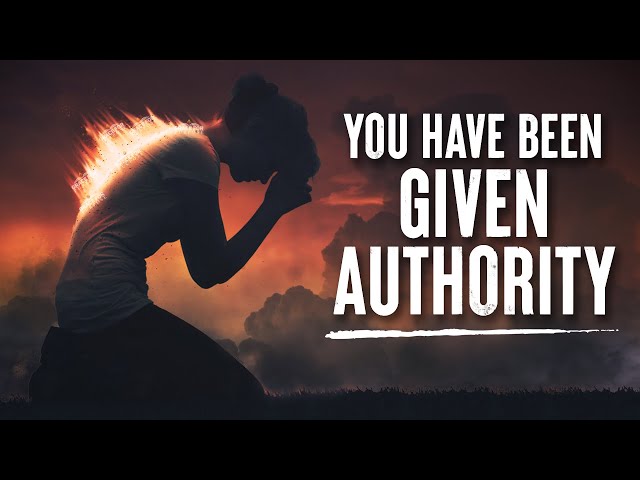
  1. Stand in God‑Given Authority
    Resist with confidence.
    Stop giving the enemy credit he doesn’t deserve.
    Break agreement with lies.
  2. Walk in the Light
    Bring hidden places into Christ’s light.
    Surrender what you’ve been holding back.
    Strengthen weak areas before they become destructive.
  3. Trust God’s Sovereignty
    Job’s story is not about Satan’s power—it’s about God’s control.
    What God allows, He governs.
    The enemy’s activity is temporary; God’s plan is eternal.

We Have Been Given Power

  • Christ’s victory is our inheritance.
  • The Spirit’s power lives in us.
  • Our weapons are mighty through God.
  • The church is advancing, not retreating.

Hell has gates because we are the ones moving forward.

Be strong. Be courageous. The Lord goes before you, fights for you, and will never forsake you.

God’s Word and It’s Warnings

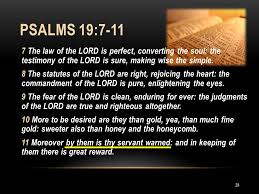
Psalm 19:11 KJV — Moreover by them is thy servant warned: and in keeping of them there is great reward.

“We are warned by the Word both of our duty, our danger, and our remedy. On the sea of life there would be many more wrecks, if it were not for the divine storm-signals, which give to the watchful a timely warning. The Bible should be our Mentor, our Monitor, our Memento Mori, our Remembrancer, and the Keeper of our Conscience. Alas, that so few men will take the warning so graciously given; none but servants of God will do so, for they alone regard their Master’s will.” Spurgeon

David is writing of the benefits and value of God’s Word. He culminates his poetic writing to verse 11. The Word of God gives warnings and the servant of God, He who heeds the warnings is rewarded.

David doesn’t treat God’s commands as restrictive fences but as protective boundaries.

The warnings of Scripture are not scoldings—they are storm‑signals, as Spurgeon said. They keep the ship from the rocks.

– The Word warns us of duty – what God calls us to do

– The Word warns us of danger – what sin will cost

– The Word warns us of remedy – where grace is found

Warnings are not signs of God’s severity; they are signs of His care. Only a servant who loves his Master pays attention to the lighthouse. I give warnings too my son’s for their benefit and safety not because I’m a killjoy.

The warnings of Scripture only help the one who:

– trusts the Master

– listens for His voice

– values His counsel

– desires His pleasure

The rebellious see warnings as restrictions.

The servant sees them as rescue.

The reward is both present and futuristic. Because God never does anything concerning us that does not have eternity in mind.

Presently we are rewarded with;

Peace – because obedience aligns us with God’s design

Clarity – because the Word lights the path

Protection – because warnings heeded prevent wounds

Joy – because obedience draws us closer to the heart of God

May we heed all that God’s Word says, for in it is life.

Peace

An art professor once gave his college class a simple assignment: paint a picture of perfect peace.
The students went to work, each convinced they knew exactly what peace looked like.

One painted a golden wheat field shimmering in a gentle breeze.
Another captured a towering oak tree with a swing swaying beneath its branches as the sun dipped behind soft, white clouds.
Others offered beaches, mountains, meadows, and quiet streams—every canvas a portrait of calm tranquility.

The professor moved from easel to easel, nodding with approval.
Then he reached the final student.

His face tightened. His eyebrows furrowed. He struggled to find words.

The painting was violent—black skies split with lightning, thunderclouds swirling, waves crashing against jagged rocks as if a hurricane were moments away. The professor finally blurted out, “I asked for a picture of perfect peace. What is this supposed to be?”

“Sir,” the student replied gently, “look closer.”

The professor leaned in. Hidden deep within the rocks, tucked safely in a narrow cleft, sat a pair of doves. Dry. Sheltered. Unshaken. Their nest secure despite the chaos raging around them.

“Professor,” the student said, “this is perfect peace. Not the absence of the storm, but the confidence of resting in the rock.”

That’s the truth we forget.

Life is unpredictable. Storms rise without warning. Winds howl. Waves crash. Darkness rolls in. But peace was never meant to be found in the calm—it’s found in the Christ who holds us steady when nothing else does.

He is the Rock that doesn’t move.
He is the shelter that doesn’t leak.
He is the refuge that doesn’t crumble.

The storm may rage, but those who rest in Him remain unmoved.

Be encouraged today and read these verses. He will give you His perfect peace.

Isaiah 26:3 (KJV)
“Thou wilt keep him in perfect peace, whose mind is stayed on thee: because he trusteth in thee.”

Christ Is the Rock of Refuge
Psalm 61:2 (KJV)
“From the end of the earth will I cry unto thee, when my heart is overwhelmed: lead me to the rock that is higher than I.”

Psalm 18:2 (KJV)
“The Lord is my rock, and my fortress, and my deliverer; my God, my strength, in whom I will trust…”

Peace in the Midst of the Storm
John 14:27 (KJV)
“Peace I leave with you, my peace I give unto you… Let not your heart be troubled, neither let it be afraid.”

Mark 4:39–40 (KJV)
“And he arose, and rebuked the wind, and said unto the sea, Peace, be still… And he said unto them, Why are ye so fearful? how is it that ye have no faith?”

Sheltered in the Cleft of the Rock
Psalm 91:1–2 (KJV)
“He that dwelleth in the secret place of the most High shall abide under the shadow of the Almighty. I will say of the Lord, He is my refuge and my fortress…”

Exodus 33:22 (KJV)
“And it shall come to pass, while my glory passeth by, that I will put thee in a clift of the rock…”

Waves May Crash, But God Holds Steady
Psalm 46:1–3 (KJV)
“God is our refuge and strength, a very present help in trouble. Therefore will not we fear… though the waters thereof roar and be troubled…”

Resting Under His Wings
Psalm 57:1 (KJV)
“Yea, in the shadow of thy wings will I make my refuge, until these calamities be overpast.”

WHY DOES GOD ALLOW….???

One time, in a discussion with a friend who is agnostic, asked me the above question among a series of questions

This is a question that I am not unfamiliar with. Typically, “You just have to have faith.” has been the answer of choice.

The reality? While faith is vitally important, there must come from those mature Christians a deeper understanding of the Word of God, there must be a better answer.

My answer to this friend….I don’t know. Yep, you read that right. I don’t know.

Now, don’t be confused, I know what I believe. I have experiences which reinforce my beliefs. I have studied the Bible and I have become persuaded of its Truth.

The problem is that my experiences are mine. I have faced those questions and been persuaded to trust God and His word. Therefore, it would be hard for any person to base their faith strictly on my testimony.

I have prayed, studied, researched, and I want to share with you what I have come across this far.

*The below is a mixture of an article from gotquestions.com, the bible, and my own thoughts*

The problem of evil is the appearance of a contradiction between an all-powerful, all-knowing, and all-loving God; and the human experience of suffering and evil in the world. Especially, to those who are deemed innocent (meaning they didn’t ask for suffering or mistreatment). The truth is that the bible does not leave this issue unanswered. In fact, scripture not only refers to the problem, but there are several solutions to it (the problem of evil).

    Let’s look at the Bible’s honest questioning of evil, God’s response to evil, and the scriptural solution to evil.

    Evil is something God understands and acknowledges. God’s willingness to give us free will, the making of our own choices, does open the door to moral evil. Moral evil leads to physical evil. Evil is the absence of goodness. Even in this, God has consistently acted to soften the blows that evil and suffering bring to humanity, culminating in the provision of the one and only true means of making all things right, Jesus Christ, the Lamb of God “slain from the foundation of the world.” And with that provision a great promise, evil and suffering will eternally be destroyed completely and fully.

    1. Scripture acknowledges the “Problem of Sin.”

    The book of Job is probably the most notable in discussing the reasons why mankind experiences suffering even when we don’t seem to deserve it. Other scriptures offers several passages that reflect the problem of evil.

    Habakkuk 1:2-4, Eccles. 4:1-3, Psalm 10:1, Psalm 22:1-2, Psalm 83:1-2, John 16:2-4, Romans 8:36, Revelation 6:9-10.

    They show the reality that, as scripture states, “It rains upon the just and the unjust alike.” A deep personal awareness echoes from each writer. These men, these 66 books, and the stories within show a reality of evil. Yet, there is an echo from these writers which drowns out the “problem of evil”, a recognition and a trust in the goodness of God to make all wrongs right, someday.

    2. Scripture frames the “problem of evil”

    The bible makes it clear that evil is something that God neither intended nor created. Moral evil is a necessary possibility. If we are truly free beings, then we are free to choose opposite of God’s will, meaning we can choose moral evil. Yet, this choice is not without consequences.

    First, we must understand that All God does is good! Genesis 1:31 and James 1:17 are clear in this.

    Second, man was given the choice. Genesis 2:16-17 expresses this with a clear consequence should they choose wrong. This is an important detail. There was never any guessing what the consequences were, God was clear, “You will certainly die.”

    3. Adam and Eve chose and the consequences were enacted. Genesis 3:17-19. From this one act, like a cancer, sin corrupted everything that God had made and called good. Disease, loss, pain, mistreatment, aging and physical death; all a direct result of Sin. Romans 5:12 Wherefore, as by one man sin entered into the world, and death by sin; and so death passed upon all men, for that all have sinned…

    Scripture gives to us the contrast in several places. Proverbs 14:34, Proverbs 19:3, Matthew 5:3-11, John 9:1-3, Romans 1:18-28, Romans 3:23, Hebrews 2:2-3.

    We suffer at times for our own sins at times, other times we suffer because of the sins of others, and in some cases we suffer from the natural order of cause and effect. Occasionally, we suffer for a special purpose. To bring hope or help and a warning to ourselves or others.

    In all of this, we find that this world is not all there is. The mortal life is not all we have been made for. For the believer, this is why we can face loss or persecution and simultaneously look beyond the suffering to a greater hope!

    This is another way God has revealed a remedy to dealing with the problem of evil that is rampant in the world. We have a “blessed hope” that ALL of this will one day all pass away and that which is light and Truth will remain forever!

    3. Scripture opposes the “problem of evil”

    Scripture shows that God did not create evil and does not promote it. God is described rather, as combating it. God limits its impact, gives warning of it, acts to stop the spread of it, gives us an escape from it, and some day soon will defeat it forever!

    Genesis 3:21, Genesis 4:10-15, Genesis 6:5-8, Genesis 7:1-4, Deuteronomy 9:5, Deuteronomy 30:15-18, Jonah 3:6-10, Matthew 10:28, Matthew 23:37, 1 Corinthians 6:9-11, Colossians 1:13, 2 Thess. 2:7, 2 Peter 2:9, Revelation 19:11, Revelation 20:11-15, Revelation 21:1-5.

    God has actively and is still actively trying to limit its impact. He gives clear instruction to avoid evil and given spiritual power and authority to those who want to be freed from evil’s power.

    4. Scripture resolves the “problem of Sin”

    God could’ve watched from a distance, but He didn’t. He entered into our suffering and entered into the full experiences of evil. Jesus Christ, the Son of God, came and lived in the power of the Holy Ghost, sinless.

    Matthew 16:22, Mark 10:45, Luke 22:19-20, John 14:6, John 19:16-18, John 19:30, John 20:19-20, John 20:30-31, 2 Corinthians 5:1, Hebrews 4:15, 1 John 3:1, Colossians 1:21-22.

    God, instead of creating us as robots, or deciding to doom us all because of Sin, or condoning it (It just is what it is), chose to supply to us a way out, a solution. How? By taking the punishment upon Himself.

    He entered into this mess that we willingly created, lived among us, felt every emotion that we feel, scripture even states that He was tempted (tried) in all points as we are. He came down. He didn’t remain distant, unconcerned, or inactive.

    Go with me for a moment. What did Christ take to his death? Betrayal, Being forsaken, degradation, shame, mocking, a crown of thorns, and the sin of the past, present, and future.

    Upon that cross He was nailed and with it the curse of Sin and its power. He fulfilled what was needed to conquer it, so that we could conquer it.

    Personally, I am thankful He did, because otherwise I would have no hope of anything better.

    GOD DOESN’T CHANGE

    When God spoke the stars, sun, planets, and moons into existence, He did so with perfect precision. Everything was placed in meticulous order. In that order, we see a powerful picture of both consistency and change.

    The sun rises and sets in an unchanging cycle. The moon does the same. The seasons change consistently, following a divinely appointed pattern. Though different parts of the world experience longer winters or longer summers, the order itself remains fixed.

    While these heavenly bodies remain constant in their cycles, they also bring change. Life itself is a series of changes—constant adjustments. We grow older. We have children, and they grow older. The cycle continues.

    I shared with the students that I have owned my truck for the last six years. I drove my oldest child in that truck when he was little, and now my youngest—who just turned four—rides with me in it. They love riding with me. But now, I am selling that truck. That’s a change.

    I have also lived on the same property with family for over thirty years. Now, I am the last one there. My wife and I have decided to sell and move closer to our church. A birthday, a sold truck, and an upcoming move—all reminders that change is part of life. And while change can be exciting, it can also be heartbreaking.

    Yet God remains constant.

    Scripture tells us that “Jesus Christ [is] the same yesterday, and to day, and for ever” (Hebrews 13:8).

    Seasons come and go. Changes take place. But God remains unchanging. Scripture also tells us that there is no variableness, neither shadow of turning with Him. This means there will never be a moment when God alters who He is. His nature, His character, and His personality—as revealed in Scripture—remain forever the same.

    This is wonderful news for us.

    It means God’s love for you does not change. His desire to work in your life does not waver. He loves us with an everlasting love. He works in us with great patience. And He uses our lives—through every season and every change—to testify to others of His unchanging faithfulness.

    HE UNDERSTANDS OUR TEARS

    When viewed under a microscope, tears form unique, crystalline patterns that look like aerial landscapes, with the specific shape depending on the type of tear.

    One day I was doing some research on tears, specifically, I was preparing a sermon for my church (likely a long the lines of the woman who washed the feet of Jesus with her tears), I came across an image which had four separate images of tears and under each had the “why” that caused those tears.

    One was sadness, one was happiness, one was pain, and one was caused by cutting an onion.

    I then began to look for scriptures which spoke about tears in scripture, outside of the woman mentioned above, and came across Psalm 56:8 “Thou tellest my wanderings: put thou my tears into thy bottle: are they not in thy book?”

    I was immediately overwhelmed by this reality. David made a statement to God, which alluded to an understanding that God collects our tears!

    Tears speak more about what our hearts feel than any words could ever express.

    I remember and still have many times in my Christian walk, even in regular life, that all I could do was cry. I had no words. They failed me. I couldn’t make sense of the thoughts that I was thinking nor of the emotions I was feeling. All I could do was weep. The anguish of my soul manifested itself through the tears which flowed down my face. 

    Often afterward I would have a new perspective of what was going on and felt better.  

    Tears are a language that God understands! He sees our tears, what causes our tears, and how long we will have to cry those tears before joy comes! All the while, He is moved by what troubles us and already has the solution. 

    One of my favorite verses which I learned during my time at OBI (my Bible seminary days) is, Psalm 34:6 “This poor man cried, and the LORD heard him, and saved him out of all his troubles.” 

    We can insert our names. We do cry, we groan in anguish, despair bellows from the deepest parts of our being and yet God hears and responds!  

    What a comfort it is to know that God understands our tears. 

    A greater comfort is found in Revelation 21:4. Its a promise that our tears will not last forever – “And God shall wipe away all tears from their eyes; and there shall be no more death, neither sorrow, nor crying, neither shall there be any more pain: for the former things are passed away” (Rev. 21:4). 

    One day those bottles will be poured out. Erased. Never more remembered! We will look on our savior’s face and perfect peace, love, and joy will flood over us, washing away every remembrance of the tears shed and the reasons they existed in the first place!

    Today, direct your cries unto God, He will hear them, be present, and responds to them for our benefit.

    BROKEN MIRRORS

    Every week I have the privilege of standing before our students in chapel, sharing truths that I pray will shape their lives. And in those moments, I’m reminded of something I see not only in children, but in people of every age, background, and personality: beneath the surface, most are carrying something heavy.

    They’re broken.

    Broken by the world. Broken by relationships. Broken by disappointments. Broken by words spoken. Broken by their own decisions, and broken by the decisions of others.

    And when life breaks us, our perspective shifts. It becomes distorted. It begins to have missing pieces. We start looking at ourselves and the world through a broken mirror.

    We often turn to people to fix us. And while they may help for a season, the pressures of the past, the weight of the present, and the uncertainty of the future eventually reveal the cracks again—often deeper than before.

    Some will even deem us irreparable, discarding us and adding to the pain.

    Others of us try to fix ourselves. We put on fake smiles, dress up our personalities, and pretend everything is fine. But just like handling broken glass, the more we try to piece it together ourselves, the more we cut our own hands. The pain only reminds us of how shattered we really are.

    Hopeless. Helpless. Convinced we are beyond repair.

    But there is another way. A better way.

    Isaiah tells us that Jesus came to heal the brokenhearted, to bind up wounds, to give beauty for ashes, joy for sorrow, and freedom to the captive. And in the New Testament, Christ Himself confirms this is why He came.

    The true culprit behind all our brokenness is sin. And Jesus came to deal with it once and for all. He conquered sin, and in conquering it, He made a way for us to be better than new.

    His blood takes the broken pieces of our lives—the ashes, scars, and wounds—and transforms them. He doesn’t just patch us up; He exchanges our brokenness for wholeness, our despair for hope, our sorrow for joy.

    Not only does He restore the mirror we’ve been looking through, He enlarges it. Suddenly, we see a life we never dreamed possible. A life filled with grace, freedom, and purpose.

    That’s the gospel: Jesus doesn’t just repair the broken—He makes us new.

    If you’ve been staring at life through a broken mirror, know this: you are not irreparable. In Christ, your brokenness becomes the very place where His glory shines brightest.

    If you would like to know how this is possible, message me or find someone who is a Christian that can guide you to that place of healing, redeeming, and saving.

    The Task of Forgiveness and its Benefit to YOU.

    Forgiveness doesn’t equate to trust; but Forgiveness is still required.
    Let’s see why this is more of a benefit to us than anyone else.

    Forgiveness is never an easy topic; nor is it an easy task.

    Before I go any further I want us to know that forgiveness and trust are not synonymous. We can forgive someone, but not place ourselves in a position to be hurt by them again. The two are not equal. Imagine being bitten by a wild dog and you respond, “Oh, I forgive you Mr. Wild dog.” but then you try to pet it again. The result will be the same, because that wild dogs nature has not changed…it is still wild and it will bite you again. To intentionally put yourself into the presence of someone who has hurt you, the result will be the same, they will hurt you again.

    Continuing on, I have found myself many times in the place of needing to forgive someone but it is like pulling the proverbial “eye-teeth” for me to do it.

    Why? Why is it so difficult? Why can’t we as humans just do it and move on? Well, I never really understood how to answer that for anyone or myself.

    I acknowledge what God says about it in Matthew 6:14-15 where Jesus says, “For if ye forgive men their trespasses (sins against you), your heavenly Father will also forgive you; But if ye forgive not men their trespasses, neither will your Father forgive your trespasses (sins against God and man).” And, I fully believe this.

    I suppose that was the reason why I always did, but it was always begrudgingly. It wasn’t until a few years ago that I was shown some Truth. Forgiveness is not about the offender; it is about something that coexists with God’s forgiveness of us.

    I am a school Administrator for our church’s Christian school. I hold daily staff devotion and prayer time 15 minutes before students begin to arrive. In our devotional book this year, authored by Max Lucado, the topic was on forgiveness. This is what he wrote.

    “How much justice is enough? Picture your enemy for a moment. Picture him tied to the whipping post. The strong-armed man with the whip turns to you and asks, “how many lashes?” And you give him a number. The whip cracks and the blood flows. And the punishment is inflicted. Your foe slumps to the ground and you walk away.  

    Are you happy now? Do you feel better? Are you at peace?  

    Perhaps for a while, but soon another memory will surface, and another lash will be needed, and…when does it all stop? It stops when you take seriously the words of Jesus. In Matthew 6:14-15.  

    “Treat me as I treat my neighbor.” Are you aware that this is what you are saying to your father? “Give me what I give them. Grant me the same piece I grant others. Let me enjoy the same tolerance I offer.”  

    God will treat you the way you treat others. Would you like some peace? Then quit giving your neighbor such a hassle. You want to enjoy God’s generosity? Then let others enjoy yours. Would you like to have the assurance that God Forgives you? I think you know what you need to do.”

    You might be thinking, “So How does forgiveness benefit me? What is that greater thing?”

    Well, as already stated, forgiveness opens up the door for God to forgive us. That is exciting enough, honestly! Yet, you can forgive, like I did, but begrudgingly.

    So the other part of forgiveness is this; the act of forgiveness releases a person (you the forgiver) from the emotional and psychological burdens of anger, resentment, and bitterness.

    There it is. Forgiveness, specifically God’s way, brings about freedom! Freedom to move on and Freedom from bearing the guilt of your own sin. This opens the door for you to be forgiven too!

    Release yourself from the unnecessary burden, and you never know, it might just bring a radical change in the offender.

    A Monopolized Gospel

    Recently, I was informed of some major debate going on about “plagiarism among preachers.” Now I am not one to get into what, I believe, are frivolous debates and arguments. In fact, scripture gives us insight which align with my opinion on this;2 Timothy 2:23-26, which states that foolish and ignorant arguments “produce quarrels”. Other verses, like Titus 3:9, label such disputes as “unprofitable and worthless,” while Romans 14:1 encourages believers to avoid “quarreling over disputable matters” that could harm the unity of the church.

    Yet, I do feel that it is necessary to offer another perspective. I am all for giving credit to who credit is due for intellectual property. However, when it comes to the word of God and the interpretations of it, I believe that “There is nothing new under the sun.” (Ecclesiastes 1:9), therefore the question we must ask is, “Can the gospel or the preaching of it be plagiarized?”

    Here is my perspective and you are free to have yours as well.

    Monopolization of the gospel cheapens it. When anyone makes the claim, “What I have to say concerning the gospel are mine and no one else’s,” they elevate their voice, their words to the level of divine revelation.

    When anyone rebukes another for speaking the same truth, even in the exact same phrasing, the rebuking voices elevate human words to that of divine revelation.

    However, the scripture tells us that “There is nothing new under the sun.” The gospel is not some private invention nor is the interpretation of it something sacred or proprietary.

    The gospel was written, all of it, by the breath of God, not the brilliance of man. Scripture tells us that the Holy Ghost inspired one unified testimony of scripture through several holy men for all people to share, proclaim, and live by.

    Man’s thoughts, no matter how eloquent, are not some new revelation. They are echoes, reflections, and reminders of the same already divinely declared truth.

    The gospel is not copyrighted, but it is entrusted to men who will faithfully present it.

    While I use commentaries, quotes, stories, and poems; I also use other preachers’ statements in my sermons. The reason behind all of this is because the way they stated something is what I might have been thinking but couldn’t word it accurately. While I do try to credit these individuals, there are times, in the midst of preaching that time dictates that I move a little more quickly and therefore the credit might be missing. Yet, I believe this is just a matter of good habit but not a matter of any great moral/eternal consequence.

    The real danger that should be discussed is the preaching of the gospel without the anointing. 1 Corinthians 2:4 is Paul explaining that his message was with the demonstration of the Spirit’s power.

    So, now is the part where you must do some examination. Where do you stand?

    I DID IT MY WAY

    I DID IT MY WAY

    Proverbs 14:12 – “There is a way which seemeth right unto a man, but the end thereof are the ways of death.”

    In 1968, Frank Sinatra recorded “My Way”—a song that became an anthem of self-determination. Ironically, its closest chart rival was “Amazing Grace,” a hymn of surrender. One celebrates autonomy; the other, redemption. One leads to ruin; the other, to life.

    Culture urges us to “follow your heart,” but Scripture warns that the heart is deceitful (Jeremiah. 17:9). The world cheers “I did it my way,” but Jesus calls us to follow Him, saying, “I am the Way” (John 14:6).

    The Danger of Doing It Our Way

    Solomon observed that man’s way often feels right—but ends in death. Scripture reveals five traits of man’s path:

    – Deceptive – Promises much, delivers little (Jeremiah. 17:9).

    – Difficult – “The way of transgressors is hard” (Prov. 13:15).

    – Depraved – “Every imagination…only evil continually” (Gen. 6:5).

    – Destructive – Pride blinds us to stumbling blocks (Prov. 16:18).

    – Deadly – It leads to spiritual death (Prov. 14:12).

    Biblical examples abound: Adam and Eve, Cain, Lot’s wife, Ananias and Sapphira—all chose their way and met ruin.

    The Invitation to God’s Way

    Thankfully, Proverbs offers a better path:

    – Trust – “Lean not on your own understanding” (Prov. 3:5–6).

    – Favor – “The Lord knows the way of the righteous” (Ps. 1:6).

    – Light – “Thy word is a lamp…” (Psalm. 119:105).God’s way is marked by surrender, Scripture, and Spirit-led direction. It’s not always easy, but it’s always life-giving.

    A Living Parable

    Chuck Colson, Nixon’s “hatchet man,” did things his way—until prison humbled him. There, he met Christ. His greatest failure became the launchpad for Prison Fellowship, transforming lives behind bars. He said, “My great humiliation…was the beginning of God’s greatest use of my life.”

    Choose Your Path

    Every day presents a fork in the road.

    Ask yourself:

    – Does this path begin with Christ?

    – Is it marked by righteousness?

    – Does it glorify God or gratify self?

    For the sinner: Repent and follow Christ—the Way to life.

    For the believer: Examine your steps and return to God’s path.

    For the church: Teach truth, model obedience, and expose deceptive roads.Let’s stop singing “My Way” and start walking His Way.