Every week I have the privilege of standing before our students in chapel, sharing truths that I pray will shape their lives. And in those moments, I’m reminded of something I see not only in children, but in people of every age, background, and personality: beneath the surface, most are carrying something heavy.
They’re broken.
Broken by the world. Broken by relationships. Broken by disappointments. Broken by words spoken. Broken by their own decisions, and broken by the decisions of others.
And when life breaks us, our perspective shifts. It becomes distorted. It begins to have missing pieces. We start looking at ourselves and the world through a broken mirror.
We often turn to people to fix us. And while they may help for a season, the pressures of the past, the weight of the present, and the uncertainty of the future eventually reveal the cracks again—often deeper than before.
Some will even deem us irreparable, discarding us and adding to the pain.
Others of us try to fix ourselves. We put on fake smiles, dress up our personalities, and pretend everything is fine. But just like handling broken glass, the more we try to piece it together ourselves, the more we cut our own hands. The pain only reminds us of how shattered we really are.
Hopeless. Helpless. Convinced we are beyond repair.
But there is another way. A better way.
Isaiah tells us that Jesus came to heal the brokenhearted, to bind up wounds, to give beauty for ashes, joy for sorrow, and freedom to the captive. And in the New Testament, Christ Himself confirms this is why He came.
The true culprit behind all our brokenness is sin. And Jesus came to deal with it once and for all. He conquered sin, and in conquering it, He made a way for us to be better than new.
His blood takes the broken pieces of our lives—the ashes, scars, and wounds—and transforms them. He doesn’t just patch us up; He exchanges our brokenness for wholeness, our despair for hope, our sorrow for joy.
Not only does He restore the mirror we’ve been looking through, He enlarges it. Suddenly, we see a life we never dreamed possible. A life filled with grace, freedom, and purpose.
That’s the gospel: Jesus doesn’t just repair the broken—He makes us new.
If you’ve been staring at life through a broken mirror, know this: you are not irreparable. In Christ, your brokenness becomes the very place where His glory shines brightest.
If you would like to know how this is possible, message me or find someone who is a Christian that can guide you to that place of healing, redeeming, and saving.
Forgiveness doesn’t equate to trust; but Forgiveness is still required.
Let’s see why this is more of a benefit to us than anyone else.
Forgiveness is never an easy topic; nor is it an easy task.
Before I go any further I want us to know that forgiveness and trust are not synonymous. We can forgive someone, but not place ourselves in a position to be hurt by them again. The two are not equal. Imagine being bitten by a wild dog and you respond, “Oh, I forgive you Mr. Wild dog.” but then you try to pet it again. The result will be the same, because that wild dogs nature has not changed…it is still wild and it will bite you again. To intentionally put yourself into the presence of someone who has hurt you, the result will be the same, they will hurt you again.
Continuing on, I have found myself many times in the place of needing to forgive someone but it is like pulling the proverbial “eye-teeth” for me to do it.
Why? Why is it so difficult? Why can’t we as humans just do it and move on? Well, I never really understood how to answer that for anyone or myself.
I acknowledge what God says about it in Matthew 6:14-15 where Jesus says, “For if ye forgive men their trespasses (sins against you), your heavenly Father will also forgive you; But if ye forgive not men their trespasses, neither will your Father forgive your trespasses (sins against God and man).” And, I fully believe this.
I suppose that was the reason why I always did, but it was always begrudgingly. It wasn’t until a few years ago that I was shown some Truth. Forgiveness is not about the offender; it is about something that coexists with God’s forgiveness of us.
I am a school Administrator for our church’s Christian school. I hold daily staff devotion and prayer time 15 minutes before students begin to arrive. In our devotional book this year, authored by Max Lucado, the topic was on forgiveness. This is what he wrote.
“How much justice is enough? Picture your enemy for a moment. Picture him tied to the whipping post. The strong-armed man with the whip turns to you and asks, “how many lashes?” And you give him a number. The whip cracks and the blood flows. And the punishment is inflicted. Your foe slumps to the ground and you walk away.
Are you happy now? Do you feel better? Are you at peace?
Perhaps for a while, but soon another memory will surface, and another lash will be needed, and…when does it all stop? It stops when you take seriously the words of Jesus. In Matthew 6:14-15.
“Treat me as I treat my neighbor.” Are you aware that this is what you are saying to your father? “Give me what I give them. Grant me the same piece I grant others. Let me enjoy the same tolerance I offer.”
God will treat you the way you treat others. Would you like some peace? Then quit giving your neighbor such a hassle. You want to enjoy God’s generosity? Then let others enjoy yours. Would you like to have the assurance that God Forgives you? I think you know what you need to do.”
You might be thinking, “So How does forgiveness benefit me? What is that greater thing?”
Well, as already stated, forgiveness opens up the door for God to forgive us. That is exciting enough, honestly! Yet, you can forgive, like I did, but begrudgingly.
So the other part of forgiveness is this; the act of forgiveness releases a person (you the forgiver) from the emotional and psychological burdens of anger, resentment, and bitterness.
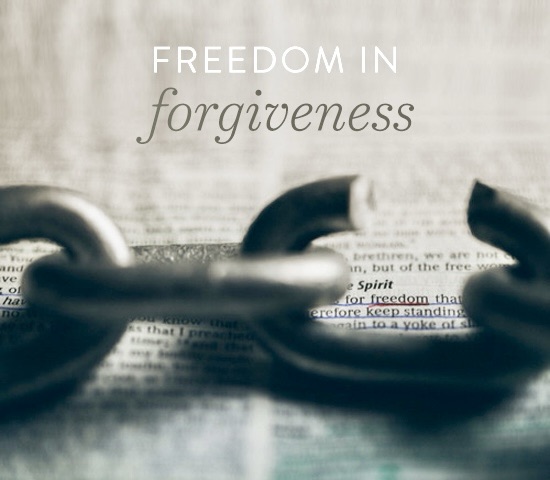
There it is. Forgiveness, specifically God’s way, brings about freedom! Freedom to move on and Freedom from bearing the guilt of your own sin. This opens the door for you to be forgiven too!
Release yourself from the unnecessary burden, and you never know, it might just bring a radical change in the offender.
Recently, I was informed of some major debate going on about “plagiarism among preachers.” Now I am not one to get into what, I believe, are frivolous debates and arguments. In fact, scripture gives us insight which align with my opinion on this;2 Timothy 2:23-26, which states that foolish and ignorant arguments “produce quarrels”. Other verses, like Titus 3:9, label such disputes as “unprofitable and worthless,” while Romans 14:1 encourages believers to avoid “quarreling over disputable matters” that could harm the unity of the church.
Yet, I do feel that it is necessary to offer another perspective. I am all for giving credit to who credit is due for intellectual property. However, when it comes to the word of God and the interpretations of it, I believe that “There is nothing new under the sun.” (Ecclesiastes 1:9), therefore the question we must ask is, “Can the gospel or the preaching of it be plagiarized?”
Here is my perspective and you are free to have yours as well.
Monopolization of the gospel cheapens it. When anyone makes the claim, “What I have to say concerning the gospel are mine and no one else’s,” they elevate their voice, their words to the level of divine revelation.
When anyone rebukes another for speaking the same truth, even in the exact same phrasing, the rebuking voices elevate human words to that of divine revelation.
However, the scripture tells us that “There is nothing new under the sun.” The gospel is not some private invention nor is the interpretation of it something sacred or proprietary.
The gospel was written, all of it, by the breath of God, not the brilliance of man. Scripture tells us that the Holy Ghost inspired one unified testimony of scripture through several holy men for all people to share, proclaim, and live by.
Man’s thoughts, no matter how eloquent, are not some new revelation. They are echoes, reflections, and reminders of the same already divinely declared truth.
The gospel is not copyrighted, but it is entrusted to men who will faithfully present it.
While I use commentaries, quotes, stories, and poems; I also use other preachers’ statements in my sermons. The reason behind all of this is because the way they stated something is what I might have been thinking but couldn’t word it accurately. While I do try to credit these individuals, there are times, in the midst of preaching that time dictates that I move a little more quickly and therefore the credit might be missing. Yet, I believe this is just a matter of good habit but not a matter of any great moral/eternal consequence.
The real danger that should be discussed is the preaching of the gospel without the anointing. 1 Corinthians 2:4 is Paul explaining that his message was with the demonstration of the Spirit’s power.
So, now is the part where you must do some examination. Where do you stand?
Proverbs 14:12 – “There is a way which seemeth right unto a man, but the end thereof are the ways of death.”
In 1968, Frank Sinatra recorded “My Way”—a song that became an anthem of self-determination. Ironically, its closest chart rival was “Amazing Grace,” a hymn of surrender. One celebrates autonomy; the other, redemption. One leads to ruin; the other, to life.
Culture urges us to “follow your heart,” but Scripture warns that the heart is deceitful (Jeremiah. 17:9). The world cheers “I did it my way,” but Jesus calls us to follow Him, saying, “I am the Way” (John 14:6).
The Danger of Doing It Our Way
Solomon observed that man’s way often feels right—but ends in death. Scripture reveals five traits of man’s path:
– Deceptive – Promises much, delivers little (Jeremiah. 17:9).
– Difficult – “The way of transgressors is hard” (Prov. 13:15).
– Destructive – Pride blinds us to stumbling blocks (Prov. 16:18).
– Deadly – It leads to spiritual death (Prov. 14:12).
Biblical examples abound: Adam and Eve, Cain, Lot’s wife, Ananias and Sapphira—all chose their way and met ruin.
The Invitation to God’s Way
Thankfully, Proverbs offers a better path:
– Trust – “Lean not on your own understanding” (Prov. 3:5–6).
– Favor – “The Lord knows the way of the righteous” (Ps. 1:6).
– Light – “Thy word is a lamp…” (Psalm. 119:105).God’s way is marked by surrender, Scripture, and Spirit-led direction. It’s not always easy, but it’s always life-giving.
A Living Parable
Chuck Colson, Nixon’s “hatchet man,” did things his way—until prison humbled him. There, he met Christ. His greatest failure became the launchpad for Prison Fellowship, transforming lives behind bars. He said, “My great humiliation…was the beginning of God’s greatest use of my life.”
Choose Your Path
Every day presents a fork in the road.
Ask yourself:
– Does this path begin with Christ?
– Is it marked by righteousness?
– Does it glorify God or gratify self?
For the sinner: Repent and follow Christ—the Way to life.
For the believer: Examine your steps and return to God’s path.
For the church: Teach truth, model obedience, and expose deceptive roads.Let’s stop singing “My Way” and start walking His Way.
Jesus taught that true worship isn’t about places or rituals—it’s about spirit and truth. To worship in spirit means engaging with spiritual realities, not outward forms. To worship in truth means aligning with God’s Word and coming to Him authentically, not performatively.
Why We Worship
Worship is our response to God’s worth. It’s not about style or preference—it’s about revelation. As Revelation 4:11 declares, “You are worthy, our Lord and God…” We were created to worship (Isaiah 43:21) and commanded to worship (Psalm 29:2). Worship realigns our hearts, dethrones self, and enthrones Christ. It’s also warfare—silencing the enemy and shifting atmospheres (Psalm 8:2).
How We Worship
Biblical worship is both internal and external. It springs from the heart and expresses itself physically:
Bowing – Psalm 95:6
Lifting hands – Psalm 134:2
Singing – Psalm 100:2
Clapping – Psalm 47:1
Dancing – 2 Samuel 6:14
Silence – Habakkuk 2:20
Worship erupts from a recognition of who God is and what He’s done.
Worship tills the soil of the heart, breaks chains, and invites divine intervention. It’s not passive—it’s a weapon.
A Picture of True Worship
The woman with the alabaster box (Luke 7:36–50) embodied worship in spirit and truth. Her offering was costly, intimate, and unashamed. She didn’t care who understood—only that Jesus knew she was worshipping.
What if our worship became the battleground where heaven touched earth? What if we laid down our preferences and lifted up pure praise? Worship isn’t just a song—it’s a surrendered life. Let’s become a people who worship with our whole being, creating space for God to move in ways we never imagined.
(1 Peter 5:7) Casting all your care upon him; for he careth for you
Fear – is a response to a known immediate threat. The body and mind react to something specific and present.
I give you this definition, so that we know, this series is not about fears.
The reality is, fear can be appropriate and wise at times. We mustn’t confuse fear with anxiety.
Anxiety – is future oriented and often vague uneasiness or dread on what may or may not happen. The mind anticipates a threat or a loss that is not present and has not happened.
Anxiety kicks in and lingers, even becoming chronic and paralyzing. Anxiety is often a reflection of an internal struggle to trust God with the unknown or that which is out of our control.
Anxiety has dimensions to it:
1. Emotional Anxiety – This aspect touches the feelings most commonly associated with anxiety—fear, dread, restlessness, and unease.
– It often manifests as a lingering sense of worry or anticipation of something going wrong, even when no immediate threat is present.
– Emotional anxiety can make joy feel unreachable and peace seem foreign.Like David in Psalm 55:4-5, who says, “My heart is sore pained within me…fearfulness and trembling have come upon me,” emotional distress can be overwhelming.
2. Cognitive Anxiety This centers on the thoughts that race, spiral, or loop—worrying about the future, overanalyzing the past, or being trapped in “what-if” scenarios.
– It is where anxiety talks most loudly: “What if I fail?” “What if God doesn’t show up?”
– This dimension often paralyzes decision-making, clouds judgment, and corrodes trust.
3. Physical Anxiety – Anxiety isn’t just felt or thought—it courses through the body.
– Symptoms might include racing heartbeat, trembling hands, shallow breathing, upset stomach, or fatigue.
– Chronic anxiety can wear down the body over time, often creating a feedback loop: physical symptoms heighten emotional and cognitive distress.Jesus, in Gethsemane, experienced the weight of distress so heavily that His sweat became “like drops of blood” (Luke 22:44).
These affect the spiritual man. When they begin to reign in our lives, our spirit comes under attack as well.
4. Spiritual Anxiety Perhaps the most quietly crippling—when one fears God’s silence, doubts His goodness, or wrestles with the guilt of not having “enough faith.”
– This might sound like: “Where is God in this?” or “If I were truly saved, would I still feel this way?”
– Spiritual anxiety often masks itself in hypervigilance or shame, leading people to hide from God rather than run to Him.
Anxiety doesn’t have to rule! That spirit doesn’t have to have control! It doesn’t have to be the end of the story of your life but the beginning of the miraculous!
We mustn’t pretend that we don’t deal with anxiety. We mustn’t try to hide it from the one who sees all and knows all. Christ doesn’t call us to hide it or ignore it. He calls to us to:
I. Express it Before God, understanding the Lord is our anchor and as our anchor He is a great comfort in the midst of the anxiousness trying to pull us down into doubt.
– (Hebrews 6:19) Which hope we have as an anchor of the soul, both sure and stedfast, and which entereth into that within the veil;
The anchor doesn’t stop the waves, but it keeps the vessel from drifting aimlessly when they do crash. We are anchored in God Himself and there can be nothing that can move us, may we just simply trust in Him.
II. Meditate on what is true – (Philippians 4:8) Finally, brethren, whatsoever things are true, whatsoever things are honest, whatsoever things are just, whatsoever things are pure, whatsoever things are lovely, whatsoever things are of good report; if there be any virtue, and if there be any praise, think on these things.
We need to reorient our minds and confront cognitive anxiety with that which is truth. The truth of God’s word can bring order to the chaos of anxious thoughts. Remember His Promises are “Yea and in Him Amen”.
III. He Is Touched – (Hebrews 4:14) Seeing then that we have a great high priest, that is passed into the heavens, Jesus the Son of God, let us hold fast our profession. (Hebrews 4:15) For we have not an high priest which cannot be touched with the feeling of our infirmities; but was in all points tempted like as we are, yet without sin. (Hebrews 4:16) Let us therefore come boldly unto the throne of grace, that we may obtain mercy, and find grace to help in time of need.
“Sometimes we think that because Jesus is God, He could never know temptation the way we do. In part, this is true: Jesus faced temptation much more severely than we ever have or ever will. The Sinless One knows temptation in ways we don’t, because only the one who never gives into temptation knows the full strength of temptation.” Guzik
Spurgeon wrote, “Casting is a rather energetic word. He didn’t say, “Lay all your care upon Him,” because we have to do it more energetically than that. The idea is, “throw it away from you.”
This work of casting can be so difficult that we need to use two hands to do it: the hand of prayer and the hand of faith.
Prayer tells God what the care is, and asks God to help, while faith believes that God can and will do it.
Prayer spreads the letter of trouble and grief before the Lord, and opens ail its budget, and then faith cries, ‘I believe that God cares, and cares for me; I believe that he will bring me out of my distress, and make it promote his own glory.’”
IV. HE SAYS COME – (Matthew 11:28) Come unto me, all ye that labour and are heavy laden, and I will give you rest.
“‘Come; he drives none away; he calls them to himself. His favorite word is ‘Come.’ – ‘Come unto me.’ To Jesus himself we must come, by a personal trust – to the personal Saviour.” (Spurgeon)
Whether the anxiety that perplexes us be emotional, mental, physical, spiritual, or all the above we are encouraged, more like urged to come unto Him.
There’s a song we sing at my church, it’s a powerful picture of the reality that God is calling for you to come to Him and trust Him
Are you tired and troubled
Weighted down by a heavy load
Praying for change Searching for faith
Waiting on a miracle Are you drowning in questions
Can’t believe where the road has lead
There’s one who knows the heavy you hold
There’s a peace that can hold you
And a power greater than your own
When you feel so small Back to the wall
That’s when Jesus calls
Come to me All who are weary And heavy burdened
All who are hurting
Come to me I’ll be your shelter
My yoke is easy My load is light
And you can find rest for your soul
Rest for your soul
You were never meant to carry that weight alone
You were never meant to carry it on your own
Come to the cross Lay it at the feet of Jesus
Come to the cross Lay it at the feet of Jesus
There is one who knows the heavy you hold And he says
Come to meAll who are weary And heavy burdened All who are hurting
Come to me I’ll be your shelter
My yoke is easy My load is light
And you can find rest for your soul
Rest for your soul
Child of God, He is calling for you to surrender your anxiety, trust Him. Cast it upon Christ and find rest! What is it that is causing you to be plagued in your mind? What is it that keeps you awake at night? What is it that has griped your soul and torments peace, causing turmoil and suffering? Cast it upon the Savior! Find rest! Find freedom! Find Peace!
Psalm 31:9-10 KJV — Have mercy upon me, O LORD, for I am in trouble: mine eye is consumed with grief, yea, my soul and my belly. For my life is spent with grief, and my years with sighing: my strength faileth because of mine iniquity, and my bones are consumed.
TEXT: Ezekiel 36:26 (KJV) “A new heart also will I give you, and a new spirit will I put within you: and I will take away the stony heart out of your flesh, and I will give you an heart of flesh.”
We are warned in the scriptures to avoid certain aspects concerning the heart:
1. AVOID A DOUBLE HEART – Psalm 12:2A double heart is a divided heart—one that says one thing but believes another.It reflects duplicity, where outward words don’t match inward motives. James 1:8 calls such a person “double-minded, unstable in all his ways.”
2. AVOID A HARD HEART – Proverbs 28:14 A hard heart resists conviction, correction, and compassion.It is insensitive to sin, and over time, becomes calloused to the voice of the Holy Spirit.Pharaoh is a classic example—his hardened heart led to destruction.
3. AVOID A PROUD HEART – Proverbs 21:4 Pride is the root of rebellion. It exalts self above God. A proud heart says, “I don’t need help. I’ve got this.” But Scripture reminds us: “God resisteth the proud, but giveth grace unto the humble” (James 4:6). Pride blinds us to our need for transformation. It keeps the stony heart intact.
4. AVOID AN UNBELIEVING HEART – Hebrews 3:12 An unbelieving heart is not just skeptical—it’s rebellious. It refuses to trust God’s promises and turns away from His presence. Like Israel in the wilderness, unbelief kept them from entering the Promised Land.
5. AVOID A COLD HEART – Matthew 24:12 A cold heart is the result of unchecked sin and spiritual apathy. It loses its zeal, its compassion, its fire for God.In the last days, Jesus warned that love would grow cold—not just in the world, but among believers.
6. AVOID AN UNCLEAN HEART – Psalm 51:10 This was David’s cry after his sin with Bathsheba and it shows the depth of true repentance.
An unclean heart is not just stained—it’s spiritually diseased. Like a deadly cancer which spreads throughout the body rapidly.
Only God can create a clean heart—it’s not a renovation, it’s a re-creation.
This is the very promise of Ezekiel 36:26: a new heart, a new spirit, a new beginning.
“Before God can change your life, He must first capture your heart.”
We live in a world that fights for control—control of our time, our attention, our identity.
Our hearts often being captured by its allure. God stands apart. He doesn’t want to compete for: your heart. He doesn’t want to be one of many influences.
So I’m not just talking about emotions or feelings. We’re talking about the declaration of your allegiance, your trust, and your surrender unto to one and one alone.
There are 4 things you need to know.
I. GOD WANTS TRUTH AT THE CORE – (Psalms 51:6) Behold, thou desirest truth in the inward parts: and in the hidden part thou shalt make me to know wisdom.
• God desires authenticity. Not performance. Not pretense.
• He wants your devotion rooted in truth—truth that governs the inside and not just the outside. I have said it before, be honest with God, as He already knows what is going on.
II. GOD MENDS THAT WHICH IS MALIABLE – (Isaiah 64:8) But now, O LORD, thou art our father; we are the clay, and thou our potter; and we all are the work of thy hand.
• The Potter can only shape what yields to His touch.
• In a recent conversation I stated that the process that the clay goes through is not an easy one, but it yields. It doesn’t know the outcome, but it does not resist. In order for God to have control of our hearts, we must be maliable in His hand, trusting His process.
III. GOD RESISTS PRIDE, BUT POURS GRACE ON HUMILITY. (James 4:6) But he giveth more grace. Wherefore he saith, God resisteth the proud, but giveth grace unto the humble.
• HUMILITY IS THE SOIL WHERE A NEW HEART CAN BEGIN.
• A proud heart builds walls. A humble heart builds altars. One repels grace, the other attracts it.
IV. GOD ALONE CAN CREATE A NEW HEART.
• THIS CAN ONLY HAPPEN WHEN HE TAKES CONTROL OF THE HEART WE CURRENTLY POSSESS.
This is not about behavior modification—it’s about heart transformation. God doesn’t patch holes. He gives you a new heart altogether.
Ezekial is writing under the unction of the Holy Ghost to write concerning a new covenant that would come. A covenant that we can and many have become partakers of.
Adam Clarke writes His perspective on our text, “A new heart also will I give you – I will change the whole of your infected nature; and give you new appetites, new passions; or, at least, the old ones purified and refined. The heart is generally understood to mean all the affections and passions.”
And a new spirit will I put within you – I will renew your minds, also enlighten your understanding, correct your judgment, and refine your will, so that you shall have a new spirit to actuate your new heart.
I will take away the stony heart – That heart that is hard, impenetrable, and cold; the affections and passions that are unyielding, frozen to good, unaffected by heavenly things; that are slow to credit the words of God. I will entirely remove this heart: it is the opposite to that which I have promised you; and you cannot have the new heart and the old heart at the same time.• And I will give you a heart of flesh
One that can feel, and that can enjoy; that can feel love to God and to all men, and be a proper habitation for the living God.
Spurgeon, the prince of preachers wrote, “A “heart of flesh” is known by its tenderness concerning sin. The heart of flesh is tender to God’s will. Unlike a strong heart that refuses to bow before God’s dictates, when the heart of flesh is given, the will quivers like an aspen leaf in every breath of heaven and bows like a willow in every breeze of God’s Spirit. The natural will is cold, hard iron, which refuses to be hammered into form, but the renewed will, like molten metal, is quickly molded by the hand of grace. In the fleshy heart there is a tenderness of the affections. The hard heart does not love the Redeemer, but the renewed heart burns with affection toward Him. The hard heart Is selfish and coldly demands, “Why should I weep for sin? Why should I love the Lord?” But the heart of flesh says, “Lord, You know that I love You; help me to love You more!”
Jeremiah 17:9–10: “The heart is deceitful above all things…”
You may tell yourself, “This isn’t applicable. My heart is surrendered.” The reality, we are all susceptible to “doing that which is right in our own eyes.” We are susceptible to walking in our own way, while believing our heart is surrendered to the LORD.
If you’ve sensed even a trace of stoniness in your heart—bring it to God. He alone can remove what’s unyielding and replace it with what’s living. Let today be the day the heart transplant begin.
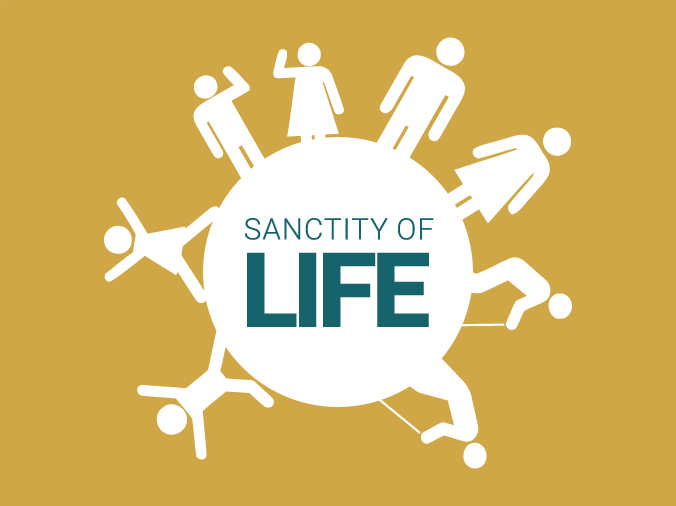
“Every human being is valuable, not because he is a genius, but because he is made in the image of God.” – Francis Schaeffer
In a culture where truth feels negotiable and life is often measured by productivity, success, or personal preference, the biblical view of human worth stands in stark contrast.
Genesis 1:26 anchors this truth: “Let us make man in our image, after our likeness.” This isn’t poetic metaphor—it’s divine identity.
The Hebrew word tselem, often translated as “image,” can also mean “shadow” or “representation.” To be human is to reflect God’s nature. It means we possess personality (mind, emotion, will), morality (a conscience and sense of right and wrong), and spirituality (a deep capacity for communion with God).
These distinctions set us apart—not only from animals, but even angels. Yet, in rejecting God’s authority, humanity has slowly lost sight of the sacredness of life.
This drift is visible across history and culture:
– Relativism tells us value is subjective.
– Dehumanization treats life as disposable.
– Materialism links worth to usefulness or achievement.
– Cultural divisions rank lives by race, wealth, or origin.
– Autonomy places self above Creator.
And the results? We see them everywhere—loss of dignity, exploitation, hatred, broken relationships, and deep spiritual emptiness.
Human trafficking alone—modern-day slavery—has reached nearly 134,000 victims worldwide in 2023, with the U.S. as one of its epicenters.
Scripture is clear: when mankind distances itself from God’s design, moral decline is not accidental; it is inevitable.
Romans 1:28–32 paints the picture bluntly. So does Proverbs 14:12: “There is a way that appears to be right, but in the end it leads to death.”We must remember: once we cease to see others as image-bearers of God, justification for abuse, violence, and injustice creeps in.
History is littered with tragic evidence—from genocide and slavery to abortion and societal neglect.
But the gospel doesn’t leave us there. It tells us our identity is redeemable. That Christ restores what sin distorts.
As believers, we hold to three vital convictions:
1. Intrinsic Worth – Every life, from conception to old age, reflects God’s image and holds divine significance (Gen. 1:27).
2. Moral Responsibility – We are called to uphold justice, show mercy, and treat others with dignity (Micah 6:8).
3. Sacred Relationship – Humans alone are made for intimate fellowship with God (Jeremiah 1:5).
This understanding should compel us to act.
So how do we live counter culturally?
We defend life. We speak up for the vulnerable (Psalm 139:13–16).
We model redemptive love, knowing no life is too broken for restoration (Col. 3:10).
We live as though every neighbor is a sacred image-bearer—because they are.
We also pray—not as passive responders but as hopeful warriors:
– For repentance and awakening (2 Chronicles 7:14)
– For boldness to speak truth in love (Ephesians 6:19–20)
– For compassion for the vulnerable (Proverbs 31:8)
– For wisdom among leaders and influencers (1 Timothy 2:1–2)
– For healing and reconciliation in broken communities (Psalm 147:3)
– For a renewed biblical lens on human dignity (Romans 12:2)
Lastly, we must equip others: teaching biblical truth, advocating for justice, and raising leaders who speak for those who cannot speak for themselves. We engage with humility, courage, and Christlike love—even when it’s unpopular.Because when the world forgets the sacredness of life, the Church must remember.
TEXT: (Romans 12:2) And be not conformed to this world: but be ye transformed by the renewing of your mind, that ye may prove what is that good, and acceptable, and perfect, will of God.
INTRO: Last month the Lord began to deal with me about admonishing the church of its need to Counter the Culture.
To counter means living in opposition to the dominant values, beliefs, and practices of the mainstream society when they conflict with biblical truth.
There is a call for you and I to arise and stand firm in faith rather than conforming. We are often bold to take our stand against these things of the world when we are in the company of those who are like minded.
Yet, we will entertain it on our reels, tv shows, and social media. (Not speaking against those “things” but rather what comes across them into our view.”
We will whisper our stance when at the restaurant while looking around making sure no one hears us.
If I may, I want to give to you from a book entitled “Counter Culter: Following Christ in an Anti-Christ Age” by David Platt, I would also encourage you to buy it and read it yourself.
“Consciously countercultural. This is the only possible posture for individuals, families, and churches who have any hope of following Christ in contemporary America.The rate of social and moral change in contemporary America is both staggeringly swift and historically unprecedented. Indeed, only God knows where we will be by the time you’re reading this book. So how should Christians respond to such a rapidly changing American culture? Do we resign ourselves to pessimism, convinced that many of the moral foundations upon which our society once stood have collapsed and are now irrecoverable? Or do we reassure ourselves with optimism, confident that we can still win the culture war if we’ll just unite together spiritually, personally, politically, and philosophically? I propose that neither pessimism nor optimism is the answer. Instead, realism is. Followers of Christ need to face the reality that contemporary American culture is increasingly anti-Christian.Across the world, followers of Christ live in settings that are hostile to Christianity (many of them far more hostile than the United States). After all, Christianity was born into a culture of opposition two thousand years ago. Across the centuries, Christians in countless cultures have lived out their faith in settings where belief in the Bible has been viewed as offensive and commitment to Christ has proved to be costly. So how should followers of Christ today live in an American or any other culture that is intentionally and increasingly anti-Christian? I am convinced that every professing Christian in any such culture has two clear options: retreat or risk. On the one hand, we can retreat.
We can retreat from Christ altogether, although I’m guessing that for most professing Christians, we won’t reject Christ outright and all at once. Instead, our retreat can be far more slow and subtle. In the name of “progressive” faith, “inclusive” belief, and “open” minds, we can begin trading in the timeless truths of God’s Word for the changing opinions of the world.
The ruins of such retreat are already evident across contemporary Christianity, as many professing “Christians” deny that God is the Author of Scripture or that Christ is necessary for salvation. In efforts to accommodate the culture, scores of individuals and churches have already abandoned Christ. Most dangerous of all is that they’ve done so under the semblance of supposed Christianity. Even if we don’t retreat from Christ, we might retreat from culture.
In the face of anti-Christian sentiments and social challenges, many Christians who hold to a belief in the Bible may choose to hide in the comfortable confines of privatized faith. We might stand up and speak with Christian conviction in the privacy of our homes and churches yet sit back and stay silent about Christian conviction in more public settings.
When the conversation at the café switches to the topic of homosexuality, for example, we might sheepishly, almost apologetically, stumble through a vague notion of what the Bible teaches, or probably more likely, we might say nothing at all. Or when our boss at work asks us what we believe and we realize that our job may be in jeopardy based on how we answer, we might find ourselves masking, or at least minimizing, the parts of our faith that could be most offensive to him or her.
Or maybe our retreat will simply involve scrolling through headlines on social media each day where we see news of rampant poverty, refugee crises, racist violence, and regulated abortions (if abortion ever even shows up in the news we receive), and instead of deciding to do something in response to these realities, we might sympathetically shake our heads and move on as if there’s nothing we can (or should) do. One of the reasons I’ve written this book is because I see temptation to retreat in the above ways all around me. I see it in Christian students who don’t want to be labeled narrow-minded or intolerant and who are slowly (or sometimes swiftly) concluding that Christianity is outdated and irrelevant.
I see it in Christian singles who think the Bible’s teaching on sex is overly restrictive and Christian couples who believe the Bible’s teaching on marriage is offensively chauvinistic. I see it in Christian parents who either isolate their children from cultural challenges or send their children into the culture ill-equipped to face those challenges.
I see it in Christian leaders who are proud to stand up and speak out on social issues like poverty and slavery when they will be commended by the culture but prone to sit back and stay silent on social issues like abortion and sexuality when they will be criticized by the culture. I see it in churches who have practically given up the battle with materialism and others who have fundamentally contributed to the problem of racism.
Ultimately, I see temptation in my own life to retreat from following Christ in the culture around me.
I see a tendency in me, my family, and my church to prioritize my comforts over Christ’s commands and to elevate my thoughts over his truth, and I know that retreat on any of the above levels isn’t right. But if we don’t retreat, only one option remains: risk. Neutrality is not a possibility. Either we retreat from Christ or from the culture, or we risk following Christ by countering the culture. And risk is the right word.
As followers of Christ, we are fooling ourselves if we don’t face the reality that belief in and obedience to the Bible in an anti-Christian age will inevitably lead to risk in one’s family, future, relationships, reputation, career, and comfort in this world.”
As stated, there is a call going out. It is a call that absolutely must have a response.
I. THE CALL TO TRANSFORMATION – WHY GOD DESIRES RENEWAL OVER CONFORMITY
A. (Romans 12:2) And be not conformed to this world: but be ye transformed by the renewing of your mind, that ye may prove what is that good, and acceptable, and perfect, will of God.Transformation is a spiritual process, not just a behavioral change. IT MOST DEFINITLY IS A CALL THAT INVOLVES BEING CHANGE FROM DARKNESS TO LIGHT, FROM DEATH TO LIFE, FROM THAT WHICH IS UNHOLY PROGRESSIVELY INTO HOLY.Our actions, attitudes, thoughts, and deepest desires will be and must be altered to match the truth of His WORD!
B. (2 Corinthians 5:17) Therefore if any man be in Christ, he is a new creature: old things are passed away; behold, all things are become new.God calls for believers to reject worldly influences and embrace His truth.We will be what we are influenced by, may we determine to be influenced by the Word of God and the Spirit of God!
C. (Ephesians 4:22) That ye put off concerning the former conversation the old man, which is corrupt according to the deceitful lusts; (Ephesians 4:23) And be renewed in the spirit of your mind; (Ephesians 4:24) And that ye put on the new man, which after God is created in righteousness and true holiness.Renewal happens through Scripture, prayer, and dwelling in the Holy Ghost and He in you.
II. THE BATTLE FOR THE MIND – HOW CULTURAL INFLUENCES SHAPE THINKING AND HOW SCRIPTURE RESHAPES IT.
A. (2 Corinthians 10:5) Casting down imaginations, and every high thing that exalteth itself against the knowledge of God, and bringing into captivity every thought to the obedience of Christ;
B. (Philippians 4:8) Finally, brethren, whatsoever things are true, whatsoever things are honest, whatsoever things are just, whatsoever things are pure, whatsoever things are lovely, whatsoever things are of good report; if there be any virtue, and if there be any praise, think on these things.
C. (Romans 8:6) For to be carnally minded is death; but to be spiritually minded is life and peace.The world bombards believers, through various means, with messages that contradict God’s truth. From this bombardment comes spiritual warfare which begins in the mind, where the thoughts begin to shape our actions, words, and desires. However, victory over these comes through the intentional focus on God’s Word and rejecting the lies of the enemy.
III. LIVING OUT THE WILL OF GOD – PRACTICAL WAYS TO WALK IN HOLINESS DESPITE WORLDLY PRESSURES.
A. (1 Thessalonians 5:16) Rejoice evermore. (1 Thessalonians 5:17) Pray without ceasing. (1 Thessalonians 5:18) In every thing give thanks: for this is the will of God in Christ Jesus concerning you.
B. (Ephesians 5:17) Wherefore be ye not unwise, but understanding what the will of the Lord is.
C. (Colossians 1:9) For this cause we also, since the day we heard it, do not cease to pray for you, and to desire that ye might be filled with the knowledge of his will in all wisdom and spiritual understanding;Living counter-culturally means choosing obedience over convenience.
We must understand that our obedience does more for us, than any earthly, fleshly, sinful convenience could. The best way to know what God expects is to seek His will and God’s will is revealed through daily prayer, Scripture study, and surrender. We must come to realize that holiness is not isolation – it’s engaging the world while remaining distinct. Its wearing a hazmat suit in the middle of the cesspool of sin.
Countering the culture does not happen naturally, as our fleshly nature leans in the direction of being one with the world. Yet, the call is for you and I to be transformed. Where our desires no longer match that of the world. It beings internally and manifests externally.
The battle field which the enemy has chosen to work is the one of the mind, we see if every day and as the old adage says, The eyes and ears are the windows to the mind. This battle is won by being filled with truth and the intentional focus of the individual on the things of God.
Us living out this truth and living God’s will requires absolute daily surrender and a bold faith that declares, “Come what may, I will serve the Lord. I will stand for truth!”
Our prayer should be, “Lord, transform me in body, soul, and mind. Empty me and fill me with you. Let me to desire truth and live truth! Help me to be bold and declare your gospel to all who will hear. For this is the purpose I have been saved. To worship you and to declare your name among the heathen!





 THE LAMPLIGHTERS PROJECT