Covenant Living: Honor God’s Name

Explore the third commandment and what it means to honor God’s name through our words, conduct, worship, and life in Christ.

COVENANT LIVING: THE TEN COMMANDMENTS FOR TODAY’S CHURCH

Scripture

Exo 20:7 Thou shalt not take the name of the LORD thy God in vain; for the LORD will not hold him guiltless that taketh his name in vain.

“To honor God’s name means to give Him the weight, the gravity, and the supreme importance that He deserves in every corner of our lives.” — John Piper

In the ancient world, kings didn’t sign their names on documents with a pen; they used a signet ring. That ring bore the king’s unique crest—his name, his authority, his very identity. To press that ring into hot wax on a decree meant: The King backs this. The King commands this. The King guarantees this.

History tells us of corrupt governors who would steal a look-alike stamp or forge the royal seal to pass laws that filled their own pockets. They weren’t just breaking a law; they were hijacking the king’s reputation to serve their own selfish appetites. They took the king’s name and made it cheap. They made it empty.

When God gave the Third Commandment on Mt. Sinai, He wasn’t just giving Israel a list of bad words to avoid. He was telling them, ‘I am giving you My name. Do not hijack it. Do not stamp My name onto your empty promises, your fake lifestyles, or your selfish ambitions.’

Names carry identity, reputation, and meaning. When God reveals His name, He reveals Himself.

The third commandment is not simply about avoiding bad language; it is about treating God’s name with the weight, reverence, and honor it deserves.

The first commandment tells us who to worship.

The second commandment tells us how to worship.

The third commandment tells us how to speak about the One we worship.

1. GOD’S NAME REVEALS GOD’S CHARACTER

When God gives His name, He is not handing out a label — He is revealing Himself.

  • YHWH — “I AM THAT I AM” (Ex. 3:14): The God who is, who does not change, who does not depend on anyone.
  • El Shaddai — God Almighty (Gen. 17:1): The God who is never outmatched, never overwhelmed.
  • Jehovah-Jireh — The Lord Will Provide (Gen. 22:14): The God who meets His people on the mountain of their need.
  • Jehovah-Rapha — The Lord Who Heals (Ex. 15:26): The God who restores what sin and suffering have broken.
  • Jehovah-Shalom — The Lord Is Peace (Judg. 6:24): The God who steps into fear and speaks calm.

His name is His character.

To treat His name lightly is to treat Him lightly.

2. WHAT IT MEANS TO TAKE GOD’S NAME IN VAIN

“Vain” means empty, weightless, hollow — using God’s name in a way that does not match His worth.

A. Using God’s name carelessly

When His name becomes a throwaway word in our mouths, it reveals He has become a throwaway God in our hearts.

B. Using God’s name falsely

To stamp God’s name on our opinions or impulses is to forge His signature on a decree He never wrote.

C. Using God’s name hypocritically

To claim His name while living in rebellion is to wear His uniform while fighting for the enemy.

D. Using God’s name irreverently

To treat holy things as common is to treat God as common.

E. Using God’s name without weight

Worship without heart, prayer without sincerity — these speak His name but do not honor it.

3. HONOR GOD’S NAME WITH YOUR WORDS

Jesus said, “Out of the abundance of the heart the mouth speaketh.”

How we speak His name reveals how we see His throne.

Honoring His name means:

  • Speaking His name with reverence
  • Refusing to attach His name to falsehood
  • Praying with sincerity
  • Worshiping with truth
  • Letting our words reflect His holiness (Eph. 4:29)

If His name is light in our mouths, it is small in our hearts.

4. HONOR GOD’S NAME WITH YOUR LIFE

The third commandment is not only about speech — it is about representation.

Paul warned that “the name of God is blasphemed among the Gentiles through you.”

The world learns God’s name not from our sermons, but from our lives.

Honoring His name means:

  • Living with integrity
  • Walking in holiness
  • Keeping our commitments
  • Treating others with grace
  • Reflecting Christ’s character
  • Living in obedience

To take His name in vain is to call yourself a Christian on Sunday and live like an atheist on Monday.

5. HONOR GOD’S NAME IN WORSHIP

Worship is the highest use of God’s name.

  • “Give unto the LORD the glory due unto His name.” (Ps. 29:2)
  • “Magnify the LORD with me.” (Ps. 34:3)
  • “The LORD’s name is to be praised.” (Ps. 113:3)

We honor His name when we worship with awe, sing with sincerity, pray with humility, listen with obedience, and serve with joy.

Worship is not performance; it is reverence.

6. HONOR GOD’S NAME IN THE NEW COVENANT

Jesus intensifies this commandment.

He teaches us to pray, “Hallowed be Thy name” — Let Your name be honored.

In the Old Covenant, God gave His name to a nation.

In the New Covenant, He gives His name to His children.

Jesus bears the name above every name.

  • He reveals the Father’s name.
  • He saves by His name.
  • He sends the Spirit in His name.

We honor God’s name through Christlike character, Spirit-filled worship, holy living, faithful witness, and obedient hearts.

Conclusion

History tells us that Alexander the Great once confronted a young soldier in his army. This soldier had been caught fleeing from battle; acting with cowardice, breaking his vows, and abandoning his post. The emperor looked at the trembling young man and asked him, ‘What is your name?’ The boy lowered his head and whispered, ‘My name is Alexander, sir.’ Alexander the Great grew furious. He grabbed the young man by his uniform, looked him dead in the eye, and said: ‘Either change your conduct, or change your name.’

The point for us today is profoundly simple: If we dare to bear the name of the Living God; if we call ourselves followers of Jesus Christ; then our conduct must honor that name. We cannot wear His name on Sunday and drag it through the mud on Monday.

“The greatest single cause of atheism in the world today is Christians: who acknowledge Jesus with their lips, walk out the door, and deny Him by their lifestyle. That is what an unbelieving world simply finds unbelievable.” — Brennan Manning

If we bear God’s name, our conduct must honor God’s name.

1. Pray for God to cleanse your speech.

Words that honor Him.

Words that reflect Him.

Words that carry weight and reverence.

Let them who hear you, feel the gravity with which you speak of God. Let your speech reveal your reverence.

2. Pray for God to align your life with His name.

Integrity.

Holiness.

Obedience.

Christlike character.

Let them who see you know that by your life, your allegiance is to God. Those who bear His name must live like His people.

3. Pray for God to restore reverence in your worship.

Awe.

Sincerity.

Humility.

Truth.

Let Him who you say you belong to, see that by your words and life, that you worship Him and Him alone.
COVENANT LIVING: NO IDOLS

In the 17th century, the emperor of India commissioned the Taj Mahal as a monument of breathtaking beauty to honor his late wife. History tells us that during the long years of construction, he became consumed with the details — the marble, the carvings, the symmetry. One day, while walking through the site, he tripped over a dusty, linen‑wrapped bundle blocking the path. Irritated, he ordered it thrown away.

Only later did he learn that the bundle was the casket containing his wife’s body.

In his obsession with the monument, he discarded the very person the monument was meant to honor.

That is what idolatry does.

The first commandment tells us who to worship.
The second commandment tells us how to worship.

God is not only concerned with exclusive loyalty — He is concerned with right worship.


What the Second Commandment Really Protects

Exodus 20:4–6 is not simply about statues. Israel lived in a world filled with carved images, sacred objects, and physical representations of gods. But the danger was never just the object — it was the heart behind it.

The human heart is not only tempted to worship the wrong god — it is tempted to worship the right God in the wrong way.


  1. God Forbids Idols Because They Distort His Nature

“Thou shalt not make unto thee any graven image.”

Scripture is clear:

  • God is a Spirit (John 4:24).
  • He is invisible (1 Timothy 1:17).
  • He is eternal (Psalm 90:2).
  • He has no physical form (Deuteronomy 4:15–16).

Any physical representation shrinks Him. It reduces His glory. It reshapes Him into something manageable, predictable, and controllable.

Isaiah asks, “To whom then will ye liken God?” (Isaiah 40:18).
The answer: no one and nothing.

Psalm 115 says idols have mouths but cannot speak, eyes but cannot see, ears but cannot hear — and those who make them become like them.

Idols distort God’s nature, and in doing so, they distort ours.


  1. God Forbids Idols Because They Distort Our Worship

“Thou shalt not bow down thyself to them, nor serve them.”

Idols redirect worship away from the living God and toward created things. They redefine worship into ritual, superstition, or manipulation.

Think of Exodus 32. Israel made a golden calf and called it “a feast to the LORD.”
They used God’s name — but not God’s way.

Jesus sets the standard:
“They that worship Him must worship Him in spirit and in truth.” (John 4:24)

Right worship rests on four pillars:

  • Christ alone — the true image of the invisible God (Colossians 1:15).
  • Obedience — God rejects ritual without righteousness (Isaiah 1:11–17).
  • A transformed life — worship as daily surrender (Romans 12:1).
  • Heartfelt devotion — humility, sincerity, and love.

Idols replace inward devotion with outward substitutes.


  1. God Forbids Idols Because They Damage Generations

Idolatry creates patterns — priorities, values, desires — that children naturally imitate.

Scripture is clear:
“The soul that sinneth, it shall die.” (Ezekiel 18:20)

God is not punishing innocent children.
He is warning that idolatry becomes generational culture.

Paul teaches that idolatry leads to:

  • darkened hearts
  • futile minds
  • corrupted desires (Romans 1:21–25)

Idols don’t just affect individuals — they affect households, communities, and generations.


  1. God Commands Right Worship Because He Is Jealous for Our Good

God’s jealousy is not insecurity — it is covenant love.

It is the jealousy of:

  • a husband protecting his bride
  • a father protecting his children
  • a shepherd protecting his sheep

Paul echoes this:
“I am jealous over you with godly jealousy.” (2 Corinthians 11:2)

God desires our worship because He desires our good.


  1. God Promises Mercy to Those Who Worship Him Rightly

Idols destroy generations.
Right worship blesses generations.

God promises mercy, stability, identity, and strength to those who love Him and keep His commandments.

Right worship produces a distinct people —
a people marked by holiness, truth, and covenant love (1 Peter 2:9).


The New Covenant Fulfillment: Christ Destroys Idols in the Heart

Jesus does not abolish the second commandment — He intensifies it.

He is:

  • the true image of the invisible God (Colossians 1:15)
  • the radiance of the Father’s glory (Hebrews 1:3)

Through Christ, God gives us:

  • a new heart
  • new desires
  • new worship
  • new loyalty
  • new identity

Paul says, “Ye turned to God from idols.” (1 Thessalonians 1:9)

Idols lose their power when Christ becomes our treasure.

The second commandment is fulfilled not by striving — but by abiding.


Knowing the Psalm vs. Knowing the Shepherd

A famous actor once recited Psalm 23 at a dinner party. His voice was flawless, his delivery perfect. The room erupted in applause.

Later, an elderly pastor recited the same Psalm. His voice cracked, his posture was frail — but when he finished, the room was silent, reverent, and full of tears.

The actor said,
“I know the Psalm.
But this man knows the Shepherd.”

That is the point of the second commandment.

Idols let us act.
Right worship makes us abide.

Idols let us perform.
Right worship makes us surrender.

Idols let us memorize the script.
Right worship makes us know the Shepherd.


Three Prayer Targets for the Heart

  1. Pray for God to reveal hidden idols
    Comfort, control, approval, money, image, relationships, self — anything that takes God’s place.
  2. Pray for a return to right worship
    Worship in spirit and truth.
  3. Pray for Christ to be the treasure of the heart
    Idols lose their power when Christ becomes precious.

Related reading: For a fuller call to wholehearted biblical obedience, see To the Children of Light: Exposing Shadows, Restoring Truth by Thomas R. Hammond Jr.

NO OTHER GODS: WHY THE FIRST COMMANDMENT STILL SPEAKS TO TODAY’S CHURCH

The first commandment isn’t merely an ancient rule carved into stone; it is the blazing heartbeat of covenant life. Before God ever tells His people what to do, He tells them who He is — “I am the LORD thy God, which have brought thee out…” That declaration frames everything that follows.

The Human Heart: An Idol Factory
In Israel’s day, Baal promised prosperity and Ashtoreth promised pleasure. Today the names have changed, but the idols haven’t. We still chase the same false gods — only now they come disguised as achievement, comfort, relationships, entertainment, money, or self.

The human heart, as one writer said, is like an idol factory. It never stops producing substitutes. The first commandment confronts that factory head‑on.

What “No Other Gods” Really Means
The commandment isn’t simply about removing idols; it’s about ordering the heart. God refuses to be added to our already‑busy lives. He demands — and deserves — the center.

Every sin begins with a misplaced god.
Every act of obedience begins with a rightly‑ordered heart.

Jesus begins with the heart: Seek ye first the kingdom of God
Paul begins with the heart: Set your affection on things above

The first commandment is about relationship, loyalty, and love toward the God who rescues.


GOD DECLARES HIS EXCLUSIVE CLAIM
“Thou shalt have no other gods before Me.”

This isn’t insecurity; it’s reality. There are no other gods — only illusions, imposters, and idols.

Scripture refuses to soften idolatry:

  • Flee from idolatry — run, don’t negotiate.
  • Idolatry keeps people from inheriting the kingdom
  • Idolatry is a work of the flesh
  • Idolatry belongs to the old life
  • Unrepentant idolatry destroys witness and fellowship

Why does God start here?
Because idolatry destroys witness, corrupts fellowship, and poisons holiness. It is loving, trusting, or obeying something more than God.

What This Commandment Reveals

  • God’s exclusivity — He alone is Creator, Redeemer, Sustainer.
  • God’s covenant love — “I am the LORD your God.”
  • God’s rightful authority — He rescued Israel; He owns Israel.

GOD EMPOWERS US TO OBEY THROUGH THE SPIRIT
The Old Covenant revealed the standard.
The New Covenant provides the power.

The Spirit gives:

  • New desires — a heart that wants God.
  • New strength — power to obey.
  • New loyalty — Christ formed within us.
  • New worship — worship that is real.

Paul teaches that idols lose their power when Christ becomes our treasure:

  • “I count all things loss… that I may win Christ.”
  • “Walk in the Spirit, and ye shall not fulfill the lust of the flesh.”

The first commandment is impossible without the Spirit — and becomes inevitable with Him.


GOD USES OUR LOYALTY AS A WITNESS
When God’s people worship God alone, the world sees something different.

Exclusive worship produces:

  • Distinct identity — a people set apart.
  • Visible holiness — light that shines.
  • Compelling witness — love that proves Christ.
  • True freedom — freedom from false masters.

The early church’s power came from exclusive loyalty to Christ. They had no other gods — not Caesar, not culture, not comfort. The world saw Christ because the church worshiped Christ alone.


A CALL TO RETURN TO YOUR FIRST LOVE
Sermons like this are divine invitations — a call back to the God who rescues.

Maybe something has taken God’s place.
Maybe a substitute has stolen your affection.
Maybe a false god has promised what only the true God can give.
Maybe you’ve never served Him at all.

Hear the voice of the Rescuer again:
“I am the LORD your God, who brought you out…”

He is still bringing people out:

  • Out of bondage
  • Out of fear
  • Out of idols
  • Out of substitutes
  • Out of the Egypts we create for ourselves

The invitation is simple:
Come to the Lord your God. Return to your first love.

Related reading: Continue exploring biblical truth, worship, and faithful living, see To the Children of Light: Exposing Shadows, Restoring Truth by Thomas R. Hammond Jr.

Covenant Living: The Ten Commandments for Today’s Church – Grace Before Law

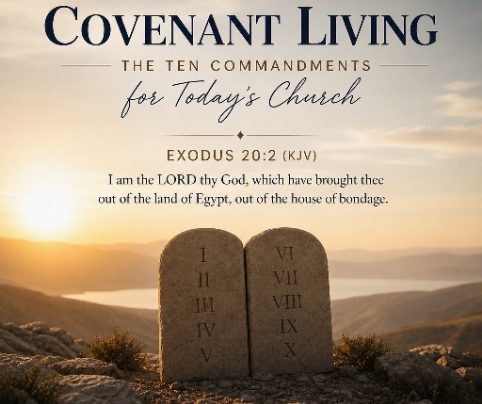
The opening lines of Exodus 20 are easy to rush past, but they are the doorway into everything that follows. Before God gives a single command, He gives a reminder — a rescue — a relationship.

“I am the LORD thy God, which have brought thee out of the land of Egypt, out of the house of bondage.” (Ex. 20:2)

That is where covenant living begins. Not with legalism. Not with pressure. Not with performance. With grace.


The Ten Commandments Begin With Rescue
Before God tells His people how to live, He tells them who He is. He anchors obedience in identity, relationship, and presence. He rescues first, then instructs. He frees, then forms.

As Morgan beautifully observed, God didn’t hand Israel a list of laws while they were still slaves, promising freedom if they obeyed. He brought them out — then taught them how to live free.

This matters for today’s church. We cannot understand the commandments unless we first understand the heart behind them.


God’s Law Reveals God’s Heart
When God speaks the commandments, He is not a distant judge handing down regulations. He begins with relationship:

“I am the LORD your God…”

Before He commands, He connects. The law flows out of His character — His holiness, His goodness, His desire for relationship.

  • God’s holiness — Leviticus 11:45
    His holiness is not cold; it is beautiful. The commandments show what holiness looks like in everyday life: worship, speech, relationships, priorities.
  • God’s goodness — Psalm 19:7–9
    Every command protects something precious: worship, marriage, truth, life, community.
  • God’s covenant love — Exodus 20:2
    The law is not a contract; it is a covenant. God says, “You belong to Me.”

The commandments are rooted in love — like a father whose rules preserve the joy of his children.


God’s Law Restores God’s People
Sin doesn’t just break rules — it breaks people. It fractures families, communities, identity. God’s law is His gracious blueprint for putting broken things back together.

  • Reordering our lives — Psalm 119:105
    God’s Word puts first things first.
  • Protecting us from self‑destruction — Psalm 119:9
    Idolatry destroys worship.
    Adultery destroys families.
    Theft destroys trust.
    Coveting destroys contentment.
  • Shaping a distinct people — Deuteronomy 10:13
    God’s commands are “for your good.” Holiness is meant to make God’s people shine.

The commandments are not shackles — they are safeguards. They are part of God’s restoration project.


God’s Law Leads Us to God’s Son
The law reveals God’s standard — and our inability to meet it. It is a mirror that exposes our sin and a tutor that leads us to Christ.

  • Shows our sin — Romans 3:20
  • Shows our inability — Galatians 3:24
  • Shows our Savior — Matthew 5:17

Jesus didn’t abolish the law — He fulfilled it. Perfectly. Sacrificially. Victoriously.

The commandments are not a ladder we climb to reach God; they are a spotlight showing our need for Jesus.


God’s Law Empowers God’s Mission
Obedience is never merely private — it is missional. A holy people display a holy God.

  • Holiness as witness — 1 Peter 2:9–12
  • Obedience that shines — Matthew 5:16
  • Love as apologetic — John 13:35

The world sees God through God’s people.


The commandments are not God’s way of keeping people out — they are God’s way of bringing people close. They reveal His heart, His goodness, His holiness, His desire for relationship, and our need for Jesus.

Maybe your life feels out of order.
Maybe sin has broken something in you — your peace, your home, your confidence.
Maybe you’ve been trying to obey God without abiding in God.

Hear His voice again:

“I am the LORD your God, who brought you out…”

He is still the God who brings people out — out of bondage, shame, fear, sin, and the “Egypts” we create for ourselves.

Before we learn the commandments, let’s meet the God who gives them.
Before we talk about obedience, let’s return to relationship.
Before we walk in holiness, let’s rest in grace.

Related reading: For further study on Scripture, love, and obedience, see To the Children of Light: Exposing Shadows, Restoring Truth by Thomas R. Hammond Jr.

NON-NEGOTIABLE

Psalm 119:30 (KJV) “I have chosen the way of truth: thy judgments have I laid before me.” 

“Men do not drop into the right way by chance; they must choose it, and continue to choose it, or they will soon wander from it.” (Spurgeon) 

The true church, for a time, chose to adhere to and follow THE TRUTH, among the true church arose individuals who decided that there were aspects of THE TRUTH were optional and could be negotiated with and adjusted; in some cases, THE TRUTH was altogether forgotten. 

There is a call to us form the mouth of God, spend time with THE TRUTH, learn THE TRUTH, receive THE TRUTH, and be constantly CHANGE by THE TRUTH! Understanding that THE TRUTH is NON-NEGOTIABLE. 

We must spend time on the non-negotiables (of God’s Word) so that our lives may glorify God. – Dennis Rainey 

Non-negotiable means that something is fixed, absolute, not open for debate, bargaining, modification. It is essentially a line drawn in the sand. This line is bold, deep, and unavoidable. 

God has provided foundational truths, commandments, and doctrines in His Word that should never be compromised, changed, or ignored in the life of the believer or in the church. 

The gospel is not meant to bend to culture, convenience, or trends. As one writer put it: “We must conform to the Word of God, not try to conform the Word of God to us.” 

These things which are non-negotiable for the believer and for the church as a whole, fall into two categories; WHAT WE BELIEVE and HOW WE LIVE. 

  1. THEOLOGICAL NON-NEGOTIABLES (WHAT WE BELIEVE)– Theological non‑negotiables’ are the core doctrines God has revealed about Himself, salvation, and the Christian faith. 
  • They define the true God. If we get God wrong, everything else is wrong. 
    The Trinity, the deity of Christ, the nature of the Spirit — these are not optional details. They are the identity of God. 
  • They protect the purity of the gospel. A negotiable gospel becomes a powerless gospel. 
    If sin is minimized, grace is minimized. 
    If Christ is reduced, salvation is reduced. 
  • They anchor the church in truth. Culture shifts. Feelings shift. Opinions shift. 
    But God’s truth does not. 
    Theological non‑negotiables’ keep the church from drifting. 
  • They shape how we live. Doctrine is not abstract — it forms character, worship, holiness, and mission. 
    What we believe about God determines how we walk with God. 
  • They guard us from deception. Every false teaching begins by softening or questioning a core doctrine. 
    Theological non‑negotiables’ act as guardrails that keep believers safe. 
  1. The Triune Godhead – Matthew 28:19 “…baptizing them in the name of the Father, and of the Son, and of the Holy Ghost.” 

This is the clearest Trinitarian formula in Scripture — one Name, three Persons. 

  1. The Deity and Work of Jesus Christ – John 1:1 “In the beginning was the Word, and the Word was with God, and the Word was God.” 

This establishes Christ’s eternal deity and divine nature. 

  1. The Infallibility of the Word of God – 2 Timothy 3:16 “All scripture is given by inspiration of God…” 

This grounds all doctrine in God breathed revelation. 

  1. Humanity’s Sinful Nature – Romans 3:23 “For all have sinned, and come short of the glory of God.” 

This explains the universal human condition. 

  1. Salvation by Grace – Through Faith – Ephesians 2:8–9 “For by grace are ye saved through faith… not of works…” 

This shows God’s remedy for man’s condition. 

  1. The Promise of the Infilling of the Holy Ghost for Every Believer – Acts 2:39 “For the promise is unto you, and to your children, and to all that are afar off…” 

This affirms the Spirit’s empowerment for all believers. 

Theological non‑negotiables’ are the truths that define Christianity. If we surrender these, we surrender the faith itself. These are the truths we stand on, live by, and if necessary, die for. 

  1. LIFESTYLES NON-NEGOTIABLES (HOW WE LIVE)- Lifestyle non‑negotiables’ are the essential practices, attitudes, and behaviors that every believer must embrace in order to live out the gospel they profess. They are not suggestions, preferences, or personality‑based choices — they are the visible evidence of a transformed life. 
  • They are the fruit of genuine salvation. A changed heart produces a changed life. 
    Lifestyle non‑negotiables’ are not how we earn salvation; they are how salvation shows. 
  • They reveal the character of Christ in us. Love, repentance, holiness, faithfulness, prayer, and devotion to the Word are not human achievements; they are Christ’s life being formed in us. 
  • They distinguish believers from the world. Without lifestyle non‑negotiables’, Christianity becomes indistinguishable from culture. 
    Holiness, obedience, and discipleship mark us as God’s people. 
  • They protect the believer from drifting. A life without repentance, prayer, or the Word becomes spiritually vulnerable. 
    Lifestyle non‑negotiables’ keep the believer anchored and aligned. 
  • They demonstrate the gospel to others. People may debate doctrine, but they cannot deny a transformed life. 
    Lifestyle non‑negotiables’ make the invisible gospel visible. 
  • They keep the believer in fellowship with God. Prayer, worship, obedience, and the Word are not religious duties; they are relational lifelines. 
  1. Love for God and Others – Matthew 22:37–39 “Thou shalt love the Lord thy God… Thou shalt love thy neighbour as thyself.” 

Love is the foundation of all Christian living. 

  1. Repentance of Sins – Acts 3:19 “Repent ye therefore, and be converted…” 

Repentance is the believer’s first response to God’s love. 

  1. Obedience and Holiness – 1 Peter 1:15–16 “Be ye holy; for I am holy.” 

Holiness is the lifestyle of those who belong to God. 

  1. Faithfulness and Discipleship – Luke 9:23 “If any man will come after me, let him deny himself, and take up his cross daily, and follow me.” 

Discipleship is daily, consistent surrender. 

  1. Prayer and Worship – 1 Thessalonians 5:17 “Pray without ceasing.” 

Prayer and worship are the believer’s continual posture. 

  1. Keeping and Studying the Oracles of God – Psalm 119:11 “Thy word have I hid in mine heart, that I might not sin against thee.” 

The Word sustains, shapes, and sanctifies the believer. 

Lifestyle non-negotiable are the daily responses God expects from every believer. They are the habits, disciplines, and attitudes that flow from a heart changed by grace. Lifestyle non‑negotiables are the practices God uses to form Christ in us and reveal Christ through us. 

God’s non-negotiables are not burdens; they are blessings. They protect us, shape us, and keep us aligned with His heart. When we honor what God has declared non-negotiable, our lives become a testimony that truly glorifies Him. 

Everything God has declared non-negotiable is meant to protect your soul, anchor your faith, and shape you into the image of Christ. 

When we negotiate what God has made non-negotiable, we weaken our walk, we confuse our identity, and we drift from the very life God is trying to give us. 

Some people try to live with one foot on God’s side of the line and one foot on the world’s side. 

God is calling the church to come back into alignment with His design. To be what He has called us and ordained us to be. May we examine ourselves and seek His face; determining to surrender, once again, to His will. 

The choice is ours.

Choose the Living God, the merciful God, the God who changes lives and redeems your story. Stand where God stands. Surrender to what He has declared non‑negotiable; and watch Him shape your life into a testimony that truly glorifies Him.

HAVE A BLESSED SUNDAY AND REST OF YOUR WEEK!

Related reading: For a book-length look at biblical truth and the believer’s responsibility to follow Christ, see To the Children of Light: Exposing Shadows, Restoring Truth by Thomas R. Hammond Jr.

The Eternal Danger of Suicide

For many years I heard the statement, “Suicide will send someone to hell.” Yet every time I searched Scripture, I couldn’t find a verse that said this verbatim. What I did find—especially while studying the book of Job in 2024—was something far more revealing and spiritually sobering.

1. Scripture affirms the sacredness of lifeThe Bible grounds human value in the image of God. Passages like Genesis 2, Psalm 139:13–17, and Jeremiah 1:5 remind us that life is not random, accidental, or disposable. It is God‑breathed, God‑crafted, and God‑purposed.Because of this, taking life—whether another’s or one’s own—is an assault on God’s image and authority.

2. Scripture exposes Satan’s agendaJesus describes Satan’s mission clearly: Kill. Steal. Destroy. (John 10:10)Peter adds that he prowls like a roaring lion, seeking someone to devour—body, mind, and spirit.Satan cannot create life. He cannot redeem life. He cannot restore life. So he seeks to end life or convince people to end their own.Suicidal thoughts are never spiritually neutral. They are always a battlefield.

3. God alone determines the boundaries of lifeIn Job, Satan is explicitly forbidden to take Job’s life. God alone holds the keys of life and death. He determines beginnings and endings, purposes and seasons.Suicide is an attempt to seize a divine prerogative.

4. Job’s wife: the closest biblical picture of suicide encouragementThis moment is often overlooked.Job’s wife says: “Curse God and die.”This is not merely despair—it is a theological act:- Reject God – Abandon faith – End your life Satan cannot kill Job, but he can pressure Job to kill himself. Job’s wife becomes the mouthpiece for that temptation.This is the spiritual anatomy of suicide: Despair + accusation + hopelessness + self‑destruction.

5. Suicide in Scripture is consistently tied to rebellion or despairEvery suicide in the Bible is connected to spiritual darkness:- Saul – Ahithophel – Zimri – Judas Not one example is of a faithful believer acting in trust or hope.

6. So does suicide automatically send someone to hell?Here is the careful, biblical answer:Scripture does NOT say:“Suicide = automatic damnation.”Scripture DOES show:- Suicide flows from spiritual darkness, deception, or rebellion. – Suicide aligns with Satan’s agenda, not God’s. – Suicide is never portrayed as an act of faith. – Suicide is spiritually dangerous because it is the final act of hopelessness—unless God intervenes.We cannot declare the eternal fate of any individual. But we can declare the eternal danger of the act.

7. The pastoral truthGod’s mercy is greater than our darkest moment. But suicide is never the act of a heart resting in God.So we preach:- Hope – Courage – Repentance – Faith – God’s timing, not our own

8. A final wordSuicide is not just a mental battle. It is a spiritual one. And Scripture calls us to choose life, choose hope, and cling to the God who restores and redeems.

What the Enemy CANNOT do – And why that matters.

Job’s story is often used to explain suffering, but tucked inside the opening chapter is a powerful revelation: the enemy is far more limited than we think. His greatest victories don’t come from power—they come from our ignorance.

What the Enemy Cannot Do

Scripture makes this unmistakably clear:

  • He must present himself before God — he is not sovereign.
  • He is limited in knowledge and movement — not omnipresent, not all‑knowing, not able to read thoughts.
  • He cannot act without permission — God sets the boundaries.
  • He cannot force sin — he can only tempt.
  • He cannot create life — only corrupt what God made.
  • He cannot stop God’s Word — nothing can overturn what God has spoken.
  • He cannot take believers from God’s hand — our security is sealed.
  • He cannot change the final outcome — his defeat is already written.

So why does he seem so effective?

Why the Enemy Appears Powerful

  1. He Works Through Human Agreement
    Satan has no authority over a believer—only influence.
    He wins when people agree with lies, fear, shame, or temptation.
  2. He Exploits Weakness and Darkness
    He studies patterns, not thoughts.
    He thrives where we refuse to surrender.
    Where there is light, he flees.
  3. He Operates in a World That Welcomes Him
    The world system—its values, desires, and priorities—aligns with his nature.
    He isn’t powerful; the world is receptive.

Our Response: Authority, Light, and Trust

  1. Stand in God‑Given Authority
    Resist with confidence.
    Stop giving the enemy credit he doesn’t deserve.
    Break agreement with lies.
  2. Walk in the Light
    Bring hidden places into Christ’s light.
    Surrender what you’ve been holding back.
    Strengthen weak areas before they become destructive.
  3. Trust God’s Sovereignty
    Job’s story is not about Satan’s power—it’s about God’s control.
    What God allows, He governs.
    The enemy’s activity is temporary; God’s plan is eternal.

We Have Been Given Power

  • Christ’s victory is our inheritance.
  • The Spirit’s power lives in us.
  • Our weapons are mighty through God.
  • The church is advancing, not retreating.

Hell has gates because we are the ones moving forward.

Be strong. Be courageous. The Lord goes before you, fights for you, and will never forsake you.

God’s Word and Its Warnings

Psalm 19:11 KJV — Moreover by them is thy servant warned: and in keeping of them there is great reward.

“We are warned by the Word both of our duty, our danger, and our remedy. On the sea of life there would be many more wrecks, if it were not for the divine storm-signals, which give to the watchful a timely warning. The Bible should be our Mentor, our Monitor, our Memento Mori, our Remembrancer, and the Keeper of our Conscience. Alas, that so few men will take the warning so graciously given; none but servants of God will do so, for they alone regard their Master’s will.” Spurgeon

David is writing of the benefits and value of God’s Word. He culminates his poetic writing to verse 11. The Word of God gives warnings and the servant of God, He who heeds the warnings is rewarded.

David doesn’t treat God’s commands as restrictive fences but as protective boundaries.

The warnings of Scripture are not scoldings—they are storm‑signals, as Spurgeon said. They keep the ship from the rocks.

– The Word warns us of duty – what God calls us to do

– The Word warns us of danger – what sin will cost

– The Word warns us of remedy – where grace is found

Warnings are not signs of God’s severity; they are signs of His care. Only a servant who loves his Master pays attention to the lighthouse. I give warnings too my son’s for their benefit and safety not because I’m a killjoy.

The warnings of Scripture only help the one who:

– trusts the Master

– listens for His voice

– values His counsel

– desires His pleasure

The rebellious see warnings as restrictions.

The servant sees them as rescue.

The reward is both present and futuristic. Because God never does anything concerning us that does not have eternity in mind.

Presently we are rewarded with;

Peace – because obedience aligns us with God’s design

Clarity – because the Word lights the path

Protection – because warnings heeded prevent wounds

Joy – because obedience draws us closer to the heart of God

May we heed all that God’s Word says, for in it is life.

WHY DOES GOD ALLOW….???

One time, in a discussion, a friend who is agnostic asked me the above question among a series of questions.

This is a question that I am not unfamiliar with. Typically, “You just have to have faith.” has been the answer of choice.

The reality? While faith is vitally important, there must come from those mature Christians a deeper understanding of the Word of God, there must be a better answer.

My answer to this friend….I don’t know. Yep, you read that right. I don’t know.

Now, don’t be confused, I know what I believe. I have experiences which reinforce my beliefs. I have studied the Bible and I have become persuaded of its Truth.

The problem is that my experiences are mine. I have faced those questions and been persuaded to trust God and His word. Therefore, it would be hard for any person to base their faith strictly on my testimony.

I have prayed, studied, researched, and I want to share with you what I have come across this far.

*The below is a mixture of an article from gotquestions.com, the bible, and my own thoughts*

The problem of evil is the appearance of a contradiction between an all-powerful, all-knowing, and all-loving God; and the human experience of suffering and evil in the world. Especially, to those who are deemed innocent (meaning they didn’t ask for suffering or mistreatment). The truth is that the bible does not leave this issue unanswered. In fact, scripture not only refers to the problem, but there are several solutions to it (the problem of evil).

    Let’s look at the Bible’s honest questioning of evil, God’s response to evil, and the scriptural solution to evil.

    Evil is something God understands and acknowledges. God’s willingness to give us free will, the making of our own choices, does open the door to moral evil. Moral evil leads to physical evil. Evil is the absence of goodness. Even in this, God has consistently acted to soften the blows that evil and suffering bring to humanity, culminating in the provision of the one and only true means of making all things right, Jesus Christ, the Lamb of God “slain from the foundation of the world.” And with that provision a great promise, evil and suffering will eternally be destroyed completely and fully.

    1. Scripture acknowledges the “Problem of Sin.”

    The book of Job is probably the most notable in discussing the reasons why mankind experiences suffering even when we don’t seem to deserve it. Other scriptures offers several passages that reflect the problem of evil.

    Habakkuk 1:2-4, Eccles. 4:1-3, Psalm 10:1, Psalm 22:1-2, Psalm 83:1-2, John 16:2-4, Romans 8:36, Revelation 6:9-10.

    They show the reality that, as scripture states, “It rains upon the just and the unjust alike.” A deep personal awareness echoes from each writer. These men, these 66 books, and the stories within show a reality of evil. Yet, there is an echo from these writers which drowns out the “problem of evil”, a recognition and a trust in the goodness of God to make all wrongs right, someday.

    2. Scripture frames the “problem of evil”

    The bible makes it clear that evil is something that God neither intended nor created. Moral evil is a necessary possibility. If we are truly free beings, then we are free to choose opposite of God’s will, meaning we can choose moral evil. Yet, this choice is not without consequences.

    First, we must understand that All God does is good! Genesis 1:31 and James 1:17 are clear in this.

    Second, man was given the choice. Genesis 2:16-17 expresses this with a clear consequence should they choose wrong. This is an important detail. There was never any guessing what the consequences were, God was clear, “You will certainly die.”

    3. Adam and Eve chose and the consequences were enacted. Genesis 3:17-19. From this one act, like a cancer, sin corrupted everything that God had made and called good. Disease, loss, pain, mistreatment, aging and physical death; all a direct result of Sin. Romans 5:12 Wherefore, as by one man sin entered into the world, and death by sin; and so death passed upon all men, for that all have sinned…

    Scripture gives to us the contrast in several places. Proverbs 14:34, Proverbs 19:3, Matthew 5:3-11, John 9:1-3, Romans 1:18-28, Romans 3:23, Hebrews 2:2-3.

    We suffer at times for our own sins at times, other times we suffer because of the sins of others, and in some cases we suffer from the natural order of cause and effect. Occasionally, we suffer for a special purpose. To bring hope or help and a warning to ourselves or others.

    In all of this, we find that this world is not all there is. The mortal life is not all we have been made for. For the believer, this is why we can face loss or persecution and simultaneously look beyond the suffering to a greater hope!

    This is another way God has revealed a remedy to dealing with the problem of evil that is rampant in the world. We have a “blessed hope” that ALL of this will one day all pass away and that which is light and Truth will remain forever!

    3. Scripture opposes the “problem of evil”

    Scripture shows that God did not create evil and does not promote it. God is described rather, as combating it. God limits its impact, gives warning of it, acts to stop the spread of it, gives us an escape from it, and some day soon will defeat it forever!

    Genesis 3:21, Genesis 4:10-15, Genesis 6:5-8, Genesis 7:1-4, Deuteronomy 9:5, Deuteronomy 30:15-18, Jonah 3:6-10, Matthew 10:28, Matthew 23:37, 1 Corinthians 6:9-11, Colossians 1:13, 2 Thess. 2:7, 2 Peter 2:9, Revelation 19:11, Revelation 20:11-15, Revelation 21:1-5.

    God has actively and is still actively trying to limit its impact. He gives clear instruction to avoid evil and given spiritual power and authority to those who want to be freed from evil’s power.

    4. Scripture resolves the “problem of Sin”

    God could’ve watched from a distance, but He didn’t. He entered into our suffering and entered into the full experiences of evil. Jesus Christ, the Son of God, came and lived in the power of the Holy Ghost, sinless.

    Matthew 16:22, Mark 10:45, Luke 22:19-20, John 14:6, John 19:16-18, John 19:30, John 20:19-20, John 20:30-31, 2 Corinthians 5:1, Hebrews 4:15, 1 John 3:1, Colossians 1:21-22.

    God, instead of creating us as robots, or deciding to doom us all because of Sin, or condoning it (It just is what it is), chose to supply to us a way out, a solution. How? By taking the punishment upon Himself.

    He entered into this mess that we willingly created, lived among us, felt every emotion that we feel, scripture even states that He was tempted (tried) in all points as we are. He came down. He didn’t remain distant, unconcerned, or inactive.

    Go with me for a moment. What did Christ take to his death? Betrayal, Being forsaken, degradation, shame, mocking, a crown of thorns, and the sin of the past, present, and future.

    Upon that cross He was nailed and with it the curse of Sin and its power. He fulfilled what was needed to conquer it, so that we could conquer it.

    Personally, I am thankful He did, because otherwise I would have no hope of anything better.

    GOD DOESN’T CHANGE

    A galaxy in space

    When God spoke the stars, sun, planets, and moons into existence, He did so with perfect precision. Everything was placed in meticulous order. In that order, we see a powerful picture of both consistency and change.

    The sun rises and sets in an unchanging cycle. The moon does the same. The seasons change consistently, following a divinely appointed pattern. Though different parts of the world experience longer winters or longer summers, the order itself remains fixed.

    While these heavenly bodies remain constant in their cycles, they also bring change. Life itself is a series of changes—constant adjustments. We grow older. We have children, and they grow older. The cycle continues.

    I shared with the students that I have owned my truck for the last six years. I drove my oldest child in that truck when he was little, and now my youngest—who just turned four—rides with me in it. They love riding with me. But now, I am selling that truck. That’s a change.

    I have also lived on the same property with family for over thirty years. Now, I am the last one there. My wife and I have decided to sell and move closer to our church. A birthday, a sold truck, and an upcoming move—all reminders that change is part of life. And while change can be exciting, it can also be heartbreaking.

    Yet God remains constant.

    Scripture tells us that “Jesus Christ [is] the same yesterday, and to day, and for ever” (Hebrews 13:8).

    Seasons come and go. Changes take place. But God remains unchanging. Scripture also tells us that there is no variableness, neither shadow of turning with Him. This means there will never be a moment when God alters who He is. His nature, His character, and His personality—as revealed in Scripture—remain forever the same.

    This is wonderful news for us.

    It means God’s love for you does not change. His desire to work in your life does not waver. He loves us with an everlasting love. He works in us with great patience. And He uses our lives—through every season and every change—to testify to others of His unchanging faithfulness.